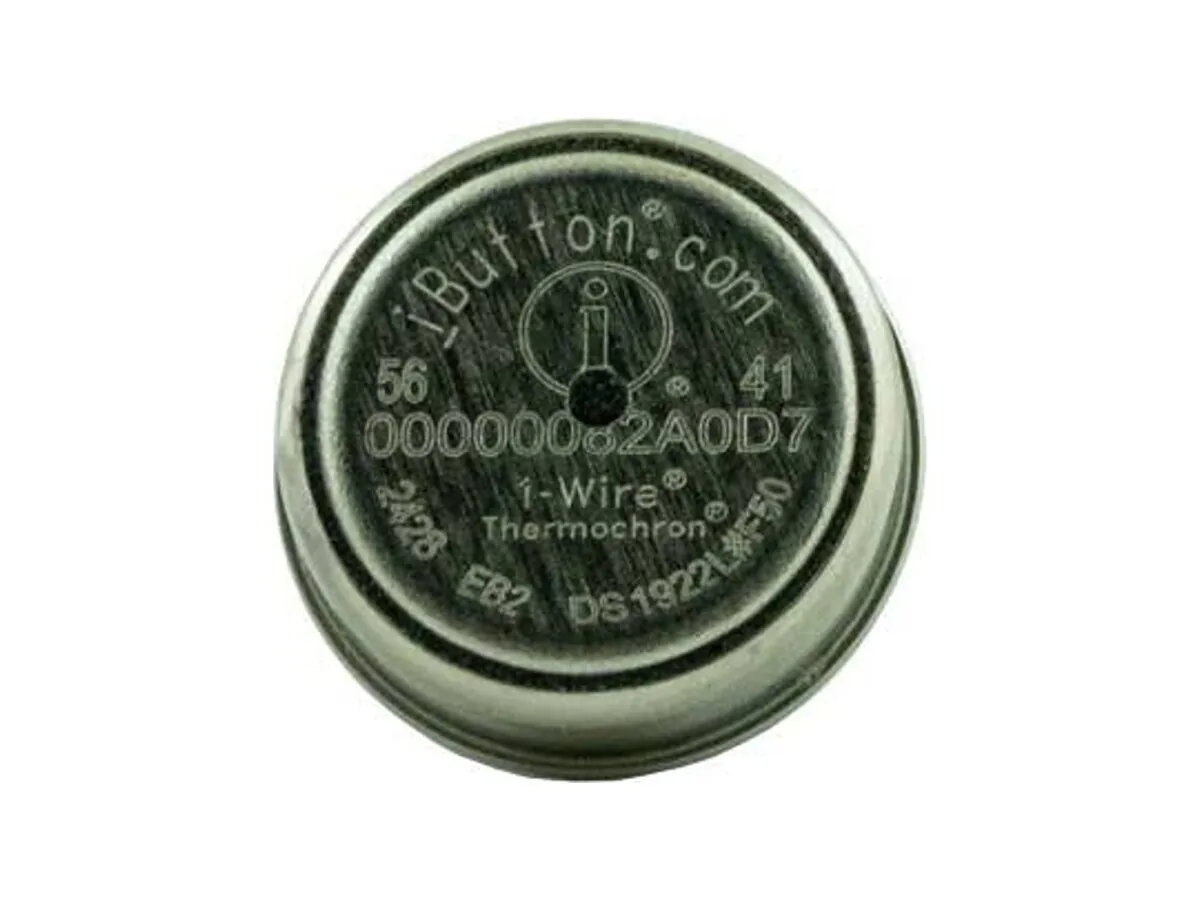
DS1922L High-Resolution Temperature Logger
±0.5 °C accuracy and 0.0625 °C resolution, sampling as fast as once per second.
Where the DS1921G proves a shipment stayed cold, the DS1922L proves exactly how cold, and catches events the slower logger would miss entirely. Software-corrected accuracy is ±0.5 °C from −10 to +65 °C, resolution goes to 11-bit (0.0625 °C), and the sample interval starts at one second — fast enough to capture a door opening, a defrost cycle or a freeze-drying step rather than just the hourly average. Two-level password protection locks the mission data, and 512 bytes of user memory travel with the device to carry batch or route identifiers.
The one that samples every second
Its minimum sample interval is 1 second, against 1 minute on the DS1921G and 5 minutes on the DS1925 — a 60× and 300× difference. That is the gap between recording that a freezer door was opened and never knowing it happened. Pair that with ±0.5 °C software-corrected accuracy and 0.0625 °C resolution and you have the logger for process validation, freeze-drying, autoclave cycles and any qualification run where the excursion lasts minutes, not hours.
Key features
- Selectable resolution: 8-bit (0.5 °C) or 11-bit (0.0625 °C), ±0.5 °C accuracy after software correction.
- 8 KB log = 8192 readings (8-bit) or 4096 readings (16-bit), each timestamped.
- Flexible sampling from 1 second to 273 hours; programmable high/low temperature alarms.
- Two-level password protection of all memory and configuration; 1-Wire conditional search for alarmed devices.
- NIST-traceable calibration, EN 12830; family code 41h; IP56 stainless steel; −40 to +85 °C.
Specifications
| Chip / compatibility | DS1922L · family code 41h |
|---|---|
| Memory | 8 KB data log = 8192 readings (8-bit) or 4096 (16-bit) + 512 B user SRAM + 64 B calibration memory |
| Operating temperature | −40 to +85 °C · 0.5 °C (8-bit) or 0.0625 °C (11-bit) · ±0.5 °C software-corrected (−10…+65 °C) |
| Protocol | Sample rate 1 s to 273 h; start immediately, after a delay, or on a temperature alarm; two-level password protection |
| Package | F5 stainless can · DS1922T variant covers 0 to +125 °C |
| Options | Read out with DS9490R USB adapter + OneWireViewer; NIST-traceable calibration on request |
Inside the stainless can
A 0.25 mm solid stainless shell, a UV-stable polypropylene grommet isolating lid from base, and the die bonded inside. Lid = data contact, base = ground return.
Which logger should you order?
The four Thermochron / Hygrochron loggers side by side — specifications per the Analog Devices datasheets.
| DS1921G | DS1922L | DS1923 | DS1925 | |
|---|---|---|---|---|
| Measures | Temperature | Temperature | Temperature + humidity | Temperature |
| Range | −40 to +85 °C | −40 to +85 °C | −20 to +85 °C · 0–100 % RH | −40 to +85 °C |
| Accuracy | ±1 °C | ±0.5 °C | ±0.5 °C · ±5 % RH | ±0.5 °C |
| Best resolution | 0.5 °C | 0.0625 °C | 0.0625 °C · 0.04 % RH | 0.0625 °C |
| Log capacity | 2048 readings | 8192 readings (8 KB) | 8192 readings (8 KB) | 125,440 readings (122 KB) |
| Fastest sample rate | 1 min | 1 second | 1 second | 5 min |
| Histogram | Yes — 63 bins at 2 °C | — | — | — |
| Password protection | — | Two-level | Two-level | Two-level |
| Family code | 21h | 41h | 41h | 53h |
| Choose it when… | Volume cold-chain shipments, lowest cost per trip | Process validation, fast excursions, tight accuracy | Condensation, mould, corrosion — RH matters | Long ocean freight, year-long unattended missions |
Ordering information
| MOQ | 100 pcs |
|---|---|
| Lead time | 3–7 days for stock items, 10–15 days for OEM |
| Packing | Bulk ESD bags (100–200 pcs/bag, 2 bags/carton); blister or header cards for retail on request |
| Samples | Free samples for volume buyers — courier at cost |
| Payment | T/T bank transfer; other terms negotiable for repeat orders |
| Shipping | DHL / FedEx / UPS air express; sea or rail freight for pallet volumes |
| Customization | ROM ranges · housing colours · laser logo · private label |
Typical applications
Frequently asked questions
DS1921G or DS1922L — which temperature logger do I need?
Two things separate them: speed and precision. The DS1922L samples as fast as once per second (the DS1921G once per minute) and reaches ±0.5 °C accuracy with 0.0625 °C resolution, versus ±1 °C and 0.5 °C. If you are proving a shipment stayed within a broad range, the DS1921G is the cheaper answer and adds a histogram. If you must catch short excursions — a door opening, a defrost cycle, an autoclave ramp — or defend a tight specification, use the DS1922L.
How long can one DS1922L mission run?
It depends entirely on the sample interval you program, which ranges from 1 second to 273 hours. At 8-bit resolution the log holds 8192 readings: one per minute covers about 5.7 days, one per 15 minutes about 85 days, one per hour about 11 months. At 16-bit resolution halve those figures (4096 readings). You can set the log to stop when full or to roll over and overwrite the oldest data.
What do I need to read the data out?
A 1-Wire host and software. The usual kit is a DS9490R USB adapter with a DS1402D Blue Dot cable, running OneWireViewer or your own application on the 1-Wire API — touch the logger to the receptor and the mission, log, alarms and histogram download in seconds. We supply the loggers and the read-out kit together so a first-time buyer is not left hunting for the adapter.
Related products
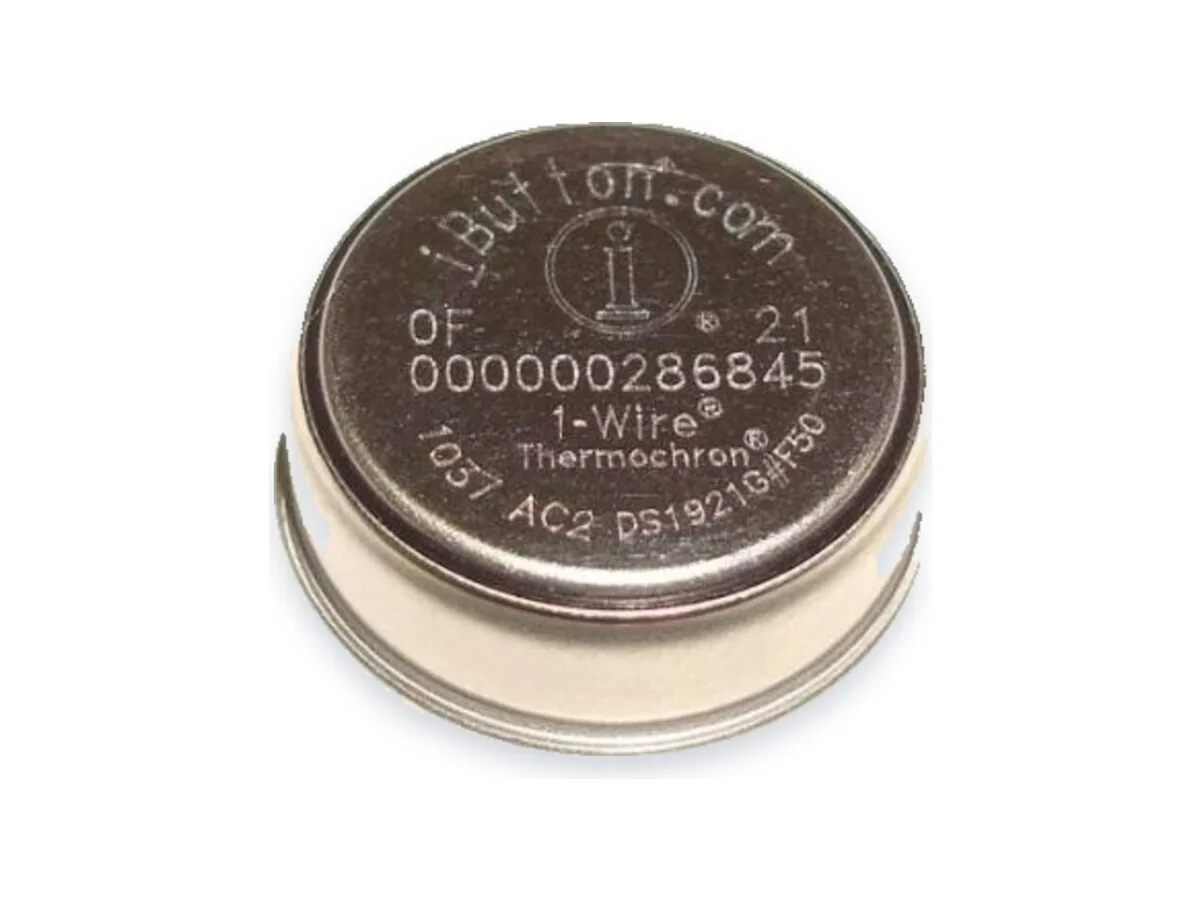
DS1921G Thermochron Temperature Logger
The workhorse cold-chain logger: 2048 timestamped readings plus a built-in histogram, −40 to +85 °C.
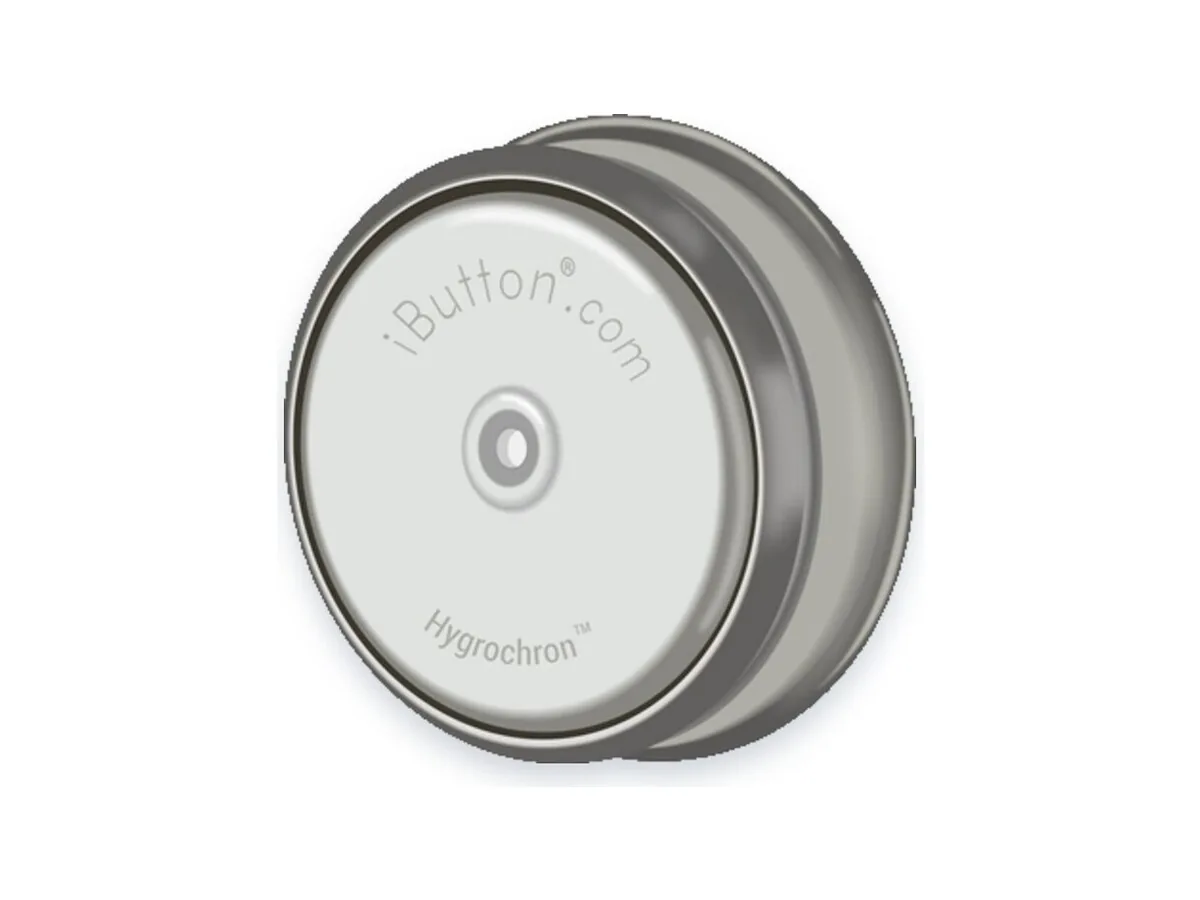
DS1923 Hygrochron Temperature + Humidity Logger
The only iButton that logs relative humidity — 0–100 % RH alongside temperature, from one sealed can.
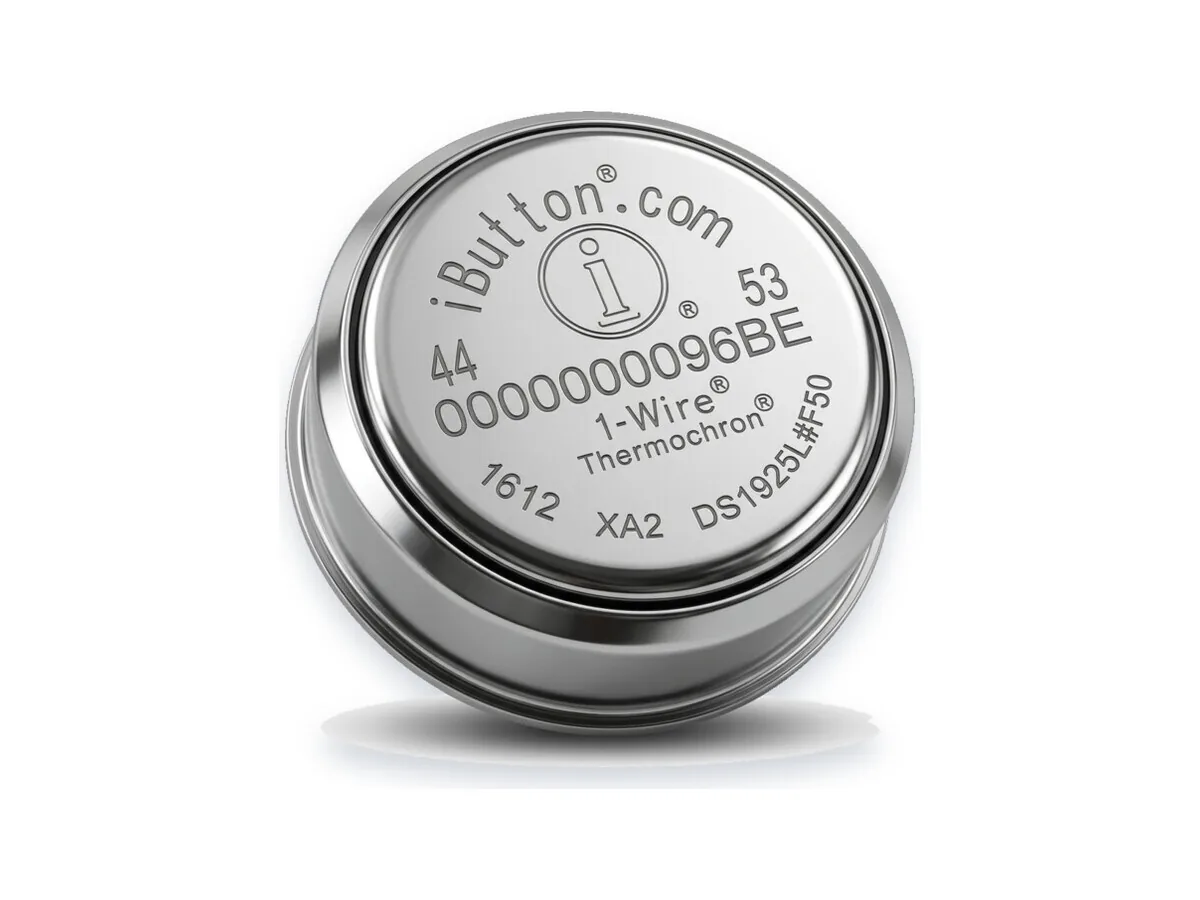
DS1925 High-Capacity Long-Mission Logger
125,440 timestamped readings — 15× the DS1922L, enough for a year-long mission at one point per 5 min.