TMR-03 Magnetic TM Key Probe
A permanent magnet holds the key on the contact — designed for reads with no pressure and no aiming.
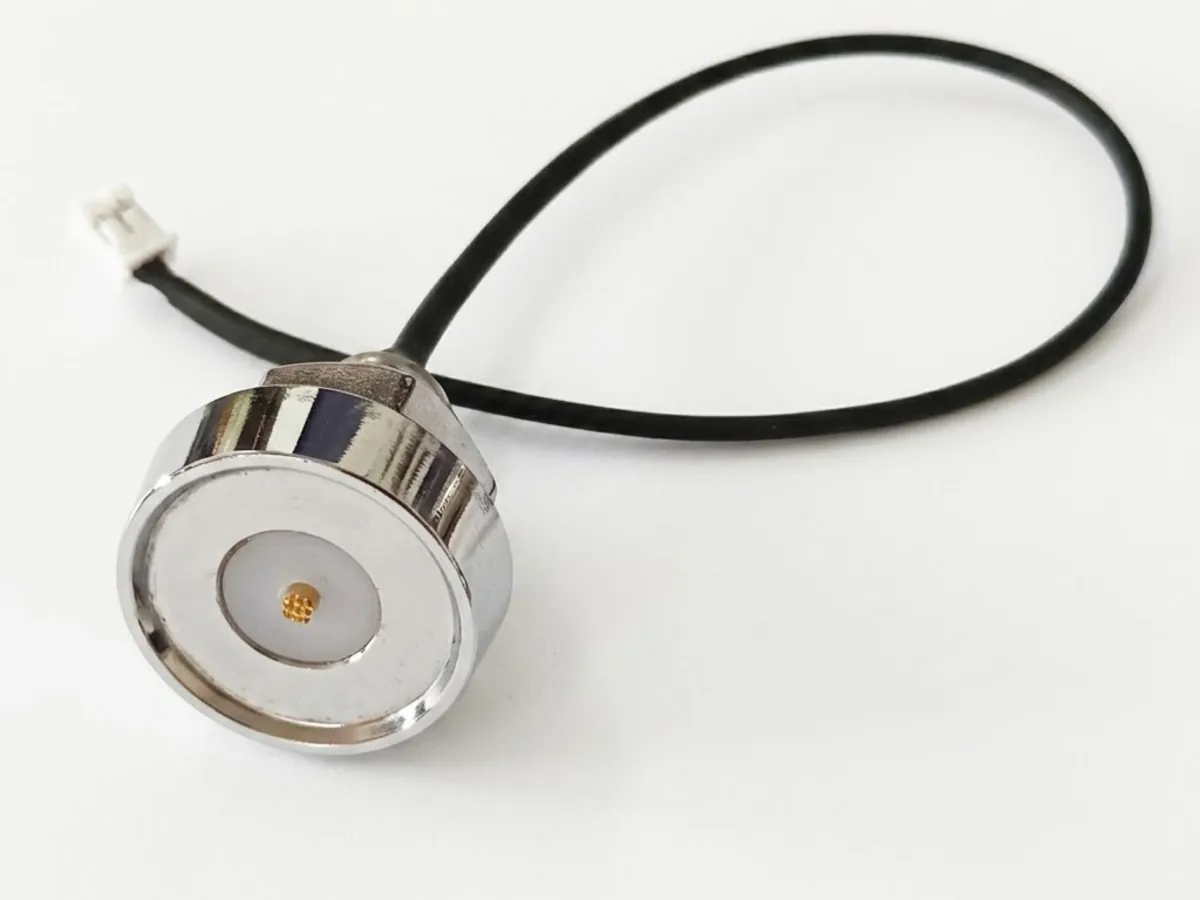
A magnet does the holding, so the user does not have to. Press an iron-ring key anywhere near the face and a high-strength permanent magnet pulls it onto the contact and keeps it there — the read can complete with no pressure applied, and the user feels a distinct click of tactile feedback confirming the key has seated. That helps in situations where readers commonly struggle: gloved hands, a queue at shift change, a driver reaching out of a cab window, anyone who taps and walks. The bright tarnish-resistant contact face is designed for heavy use (confirm the rated number of operations for the supplied version), and the M10 threaded neck fixes through a panel with a single nut.
Ordering information
| MOQ | Confirmed by model and order when quoting |
|---|---|
| Preparation time | Availability and lead time are confirmed by model and order when quoting |
| Packing | Confirm pack quantity, protection and labelling for the selected model. |
| Samples | Sample quantity, fees and shipping are confirmed for the selected model. |
| Payment | Agree payment terms and the payee in the quotation and invoice. |
| Shipping | Confirm the shipping method, cost and timing for your destination and order. |
| Customization | State ROM, colour, marking and packing needs; feasibility and cost require confirmation. |
The key holds itself — hands free at the moment of read
Other probes here need the user to hold the key against the contact for the length of the transaction. This one is designed not to: the magnet takes over the instant the key touches, and the tactile click tells the user they are done. Two consequences may follow. First, first-touch success can improve where people are rushed, gloved or one-handed. Second, the read depends less on how firmly someone presses, which is a common cause of intermittent "sometimes it works" faults on entrance doors. Test a sample on your own system before ordering. One thing to order correctly: the magnet is in the probe, not the key, so it only holds keys fitted with a steel ring — pair it with the iron-ring TMK-TM1990-R, or ask whether magnetic rings can be added to plain keys (confirmed in the quote).
Key features
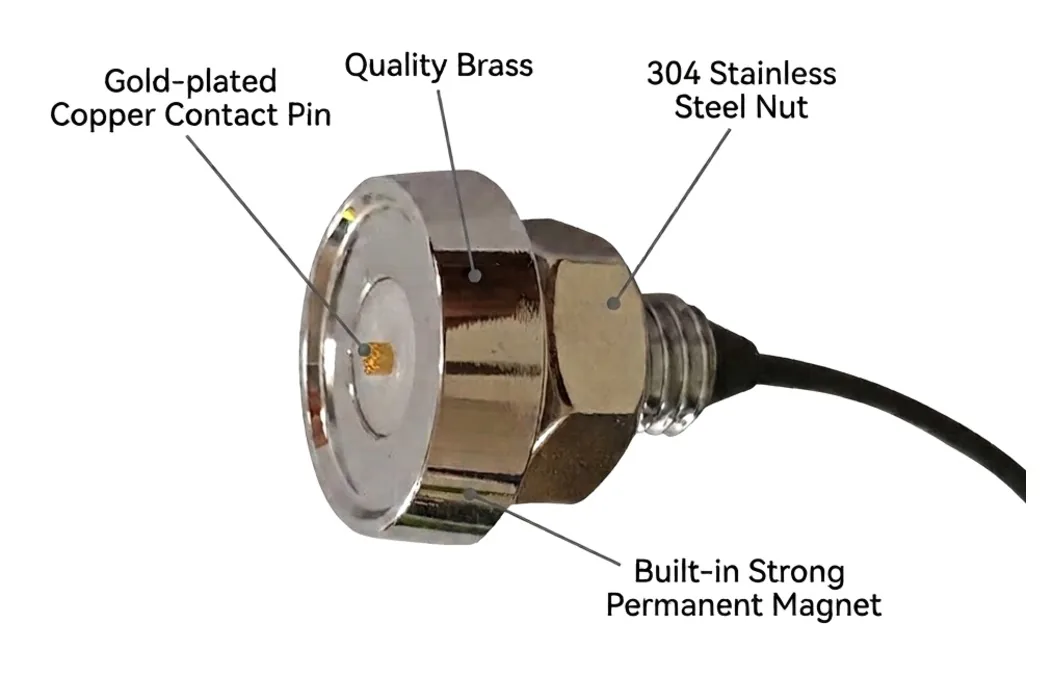
- Permanent magnet pulls the key onto the contact and holds it there.
- Tactile feedback confirms good contact, so the user knows the key has seated without watching an indicator.
- Bright tarnish-resistant metal contact surface rated for millions of operations.
- Ø24.4 mm face, 23.5 mm depth, M10 threaded neck with fixing nut for single-hole panel mounting.
- 190 mm two-wire lead (black GND, red DATA) pre-terminated with a PH2.0 connector — check that it matches your controller input.
Materials & construction
Specifications
| Chip / compatibility | Model TMR-03 · magnetic probe · pairs with iron-ring keys (TMK-TM1990-R) |
|---|---|
| Package | Chrome-plated copper contact with high-strength permanent magnet core; Ø24.4 mm face, 23.5 mm overall depth |
| Mounting | Panel mount, M10 threaded neck with nut; 190 mm two-wire lead — black GND, red DATA — terminated with a PH2.0 connector |
| Protocol | 1-Wire® |
| Operating temperature | −40 °C … +85 °C (1-Wire chip, per the original manufacturer's datasheet; confirm for the supplied version) |
| Options | Requires iron-ring (magnetic-type) keys — a plain plastic fob will not be held. Cable length, connector and other customization options: feasibility, MOQ and cost are confirmed in the quote. |
Product dimensions

Typical applications
Frequently asked questions
Does the TMR-03 need special keys?
The magnet only grips iron-ring (magnetic-type) keys such as our TMK-TM1990-R — a plain plastic fob reads on contact but will not be held. Pair reader and keys together for the full touch-and-hold behaviour.
How is it mounted and wired?
Panel mount through an M10 threaded neck with nut; the 190 mm two-wire lead (black GND, red DATA) is terminated with a PH2.0 connector. Cable length, connector and other customization options: feasibility, MOQ and cost are confirmed in the quote.
Where does a magnetic reader make the biggest difference?
Where users find it hard to press and aim: gloved hands, queues at shift change, drivers reaching from a cab window. The magnet is designed to seat an iron-ring key with a tactile click so that the read can complete with no pressure applied; actual behaviour depends on your reader and keys, so test a sample.
Related products
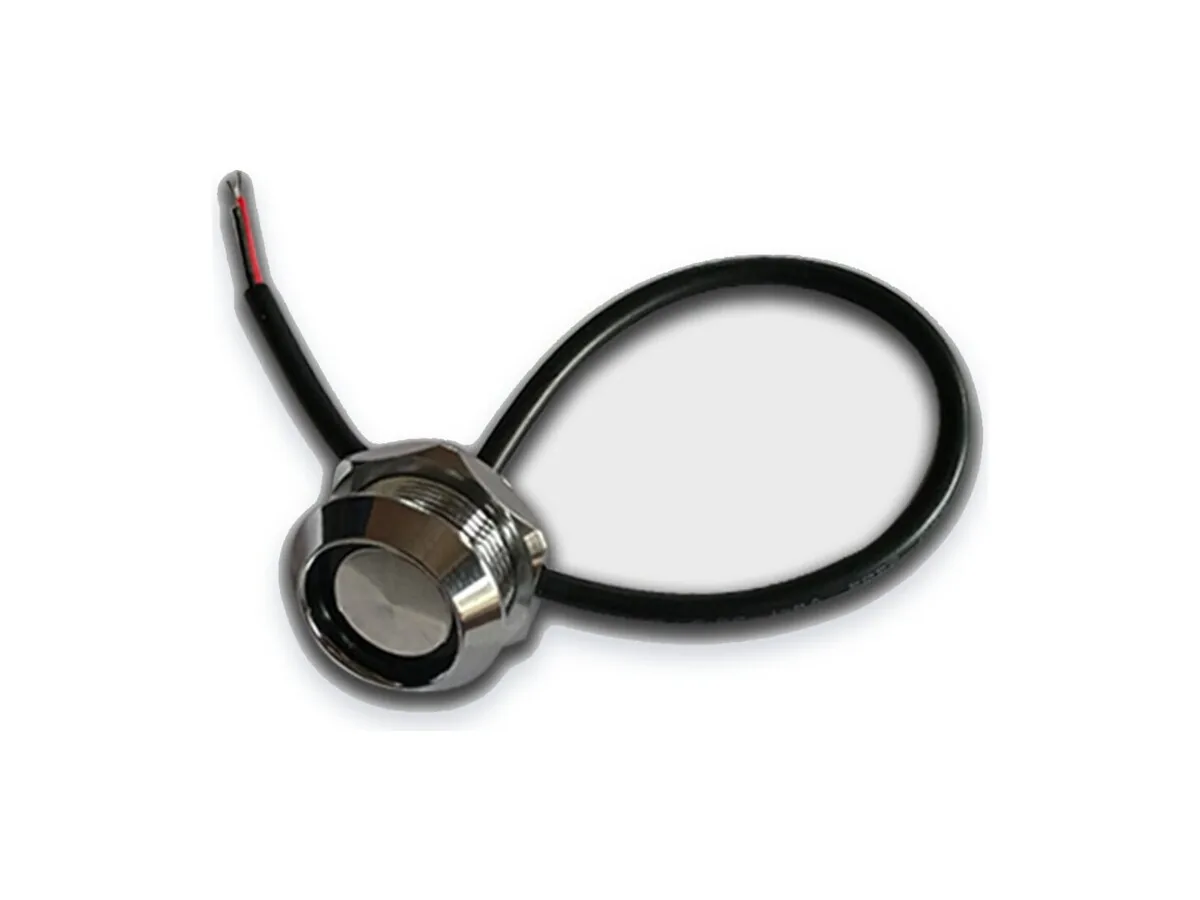
TMR-01 Copper TM Probe
Chrome-plated copper probe with pre-wired leads — the minimal front-end.
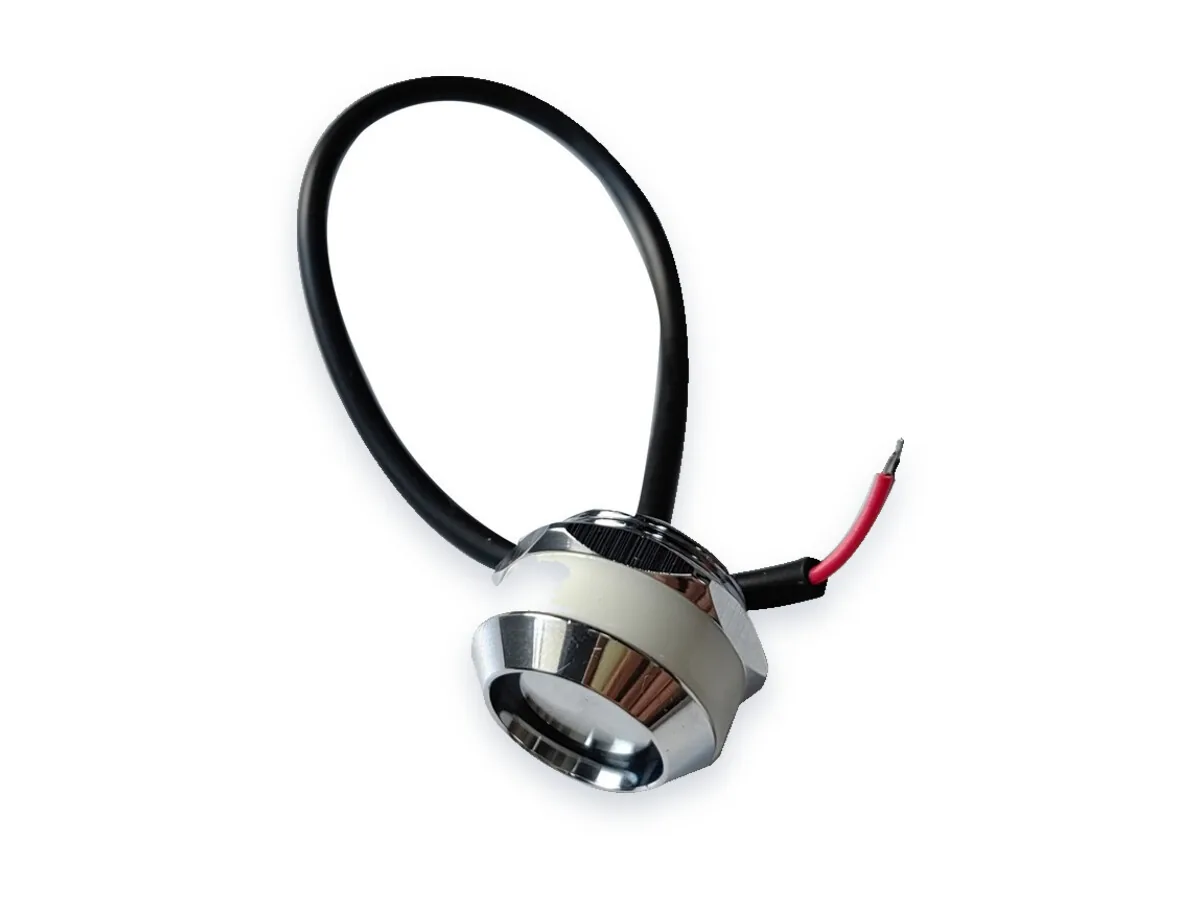
TMR-01A Copper TM Probe with Guide Ring
The TMR-01 with a polymer guide ring — the ring helps guide the key onto the contact.
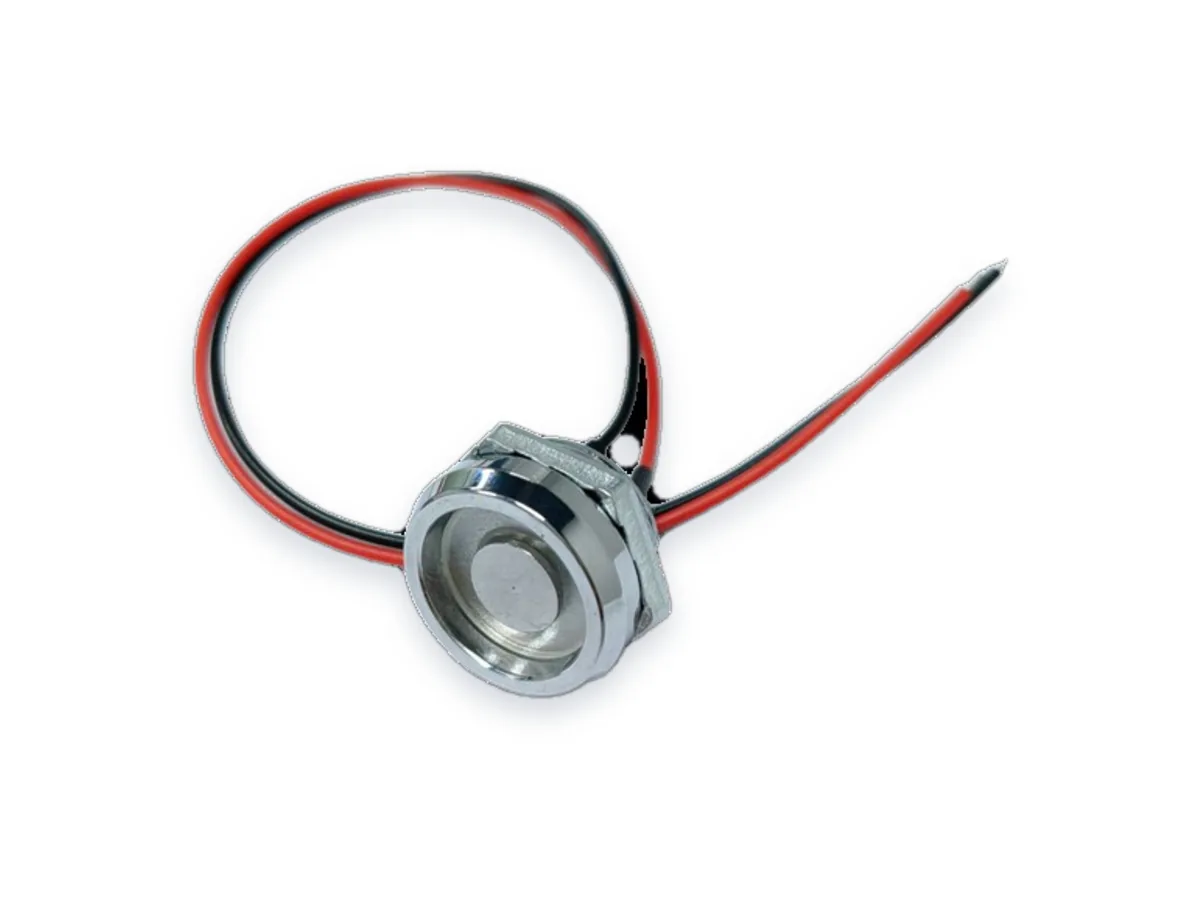
TMR-02 Panel-Mount TM Probe (DS9092 format)
DS9092-format panel probe with M18×1 nut and 200 mm leads — a familiar front end for controllers.
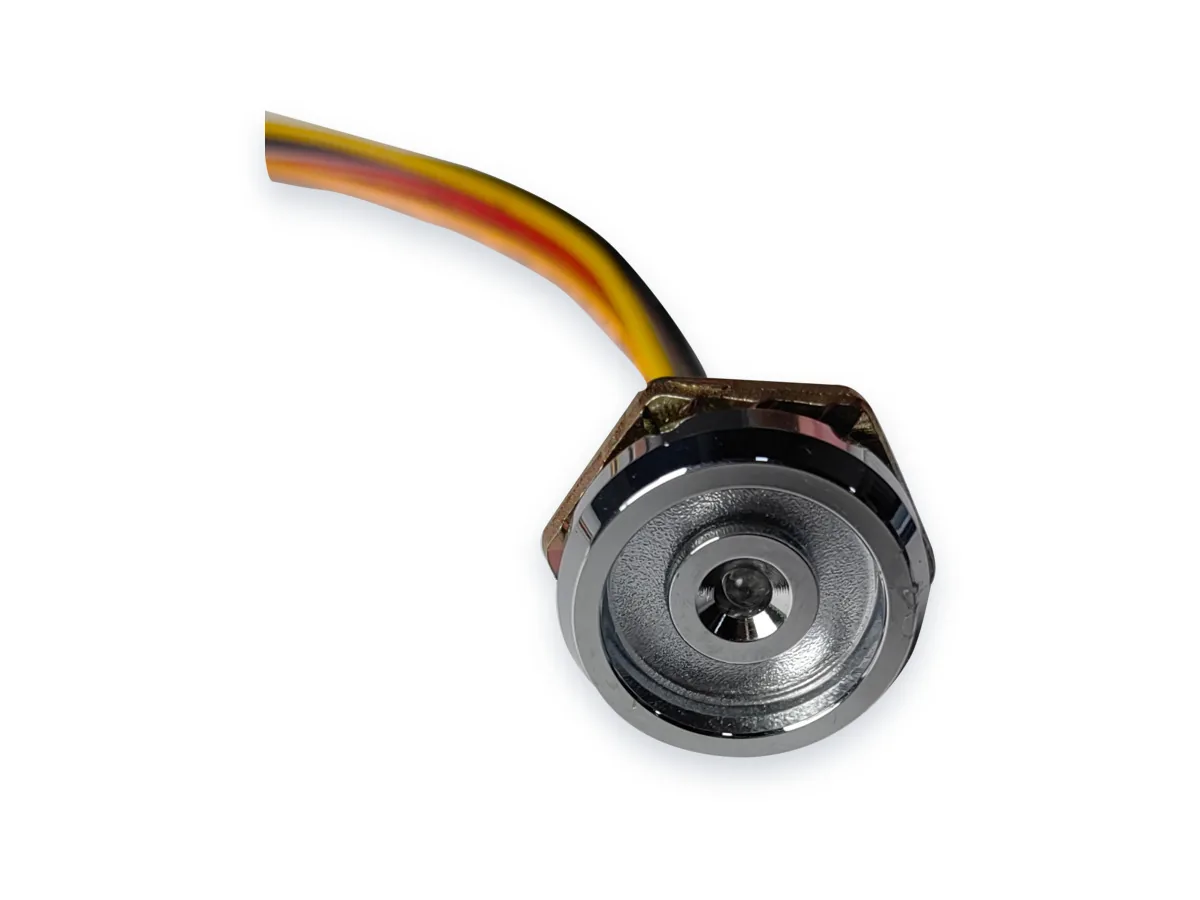
TMR-02-4P Panel Probe with LED (DS9092L format)
The TMR-02 with a built-in LED — four wires, so the controller can light the ring on a valid read.