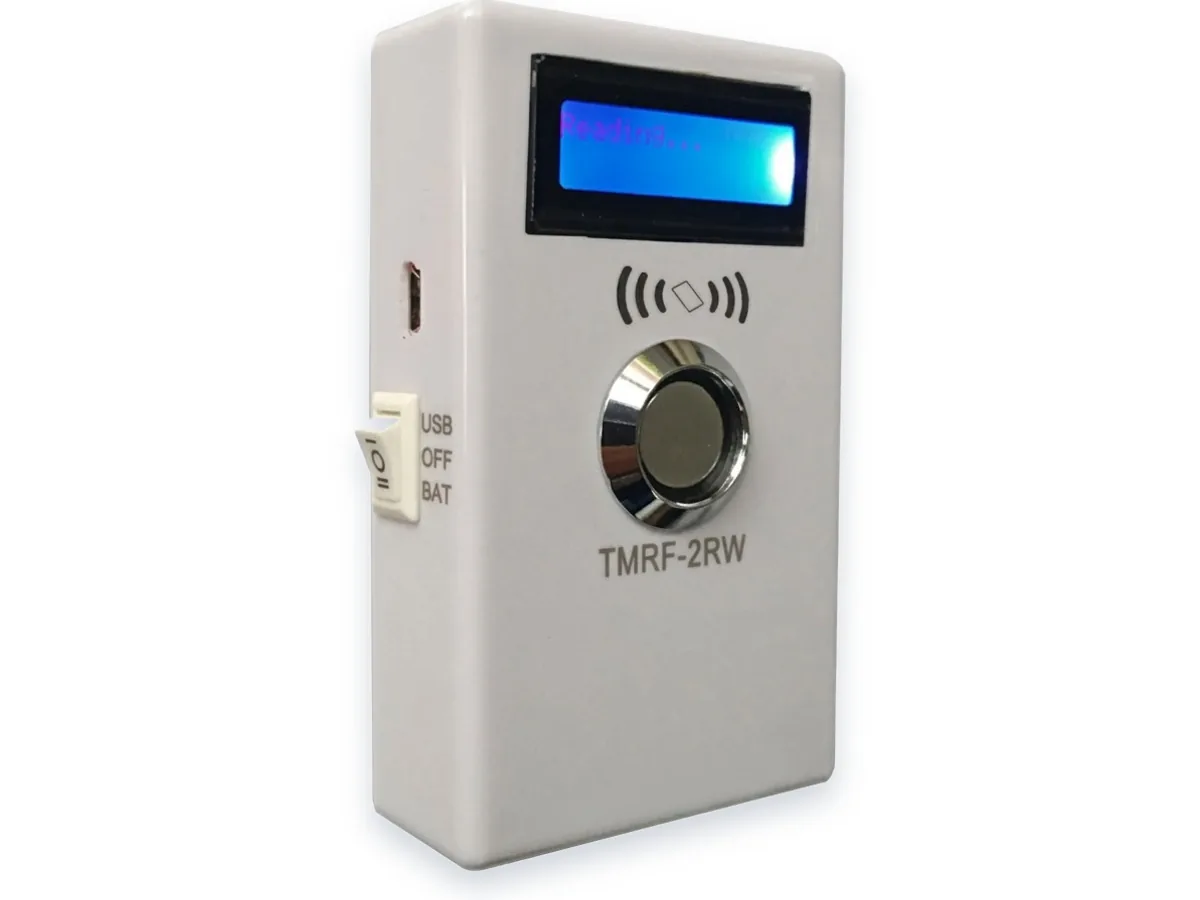
TMPRG_D Handheld Programmer
Battery programmer with screen, memory and PC upload.
Three modes in one handheld unit. Read a master and copy its ROM ID to new blanks. Or pre-edit a batch of IDs on a PC, download them over USB and issue them in the field — so a distributor can pre-code blanks for a housing project. Or upload the write log back to the PC to see exactly which IDs were issued and when.
Ordering information
| MOQ | Confirmed by model and order when quoting |
|---|---|
| Preparation time | Availability and lead time are confirmed by model and order when quoting |
| Packing | Confirm pack quantity, protection and labelling for the selected model. |
| Samples | Sample quantity, fees and shipping are confirmed for the selected model. |
| Payment | Agree payment terms and the payee in the quotation and invoice. |
| Shipping | Confirm the shipping method, cost and timing for your destination and order. |
| Customization | State ROM, colour, marking and packing needs; feasibility and cost require confirmation. |
Key features
- Three modes: field copy, pre-edit IDs on a PC and download over USB, or upload the write log back to the PC.
- 128 × 64 backlit LCD, four-key pad; 64 Kbit log memory; real-time clock.
- USB interface, 3.7 V Li-ion battery, USB charging — how a distributor pre-codes stock for a project.
Specifications
| Package | 128 × 64 dot LCD with backlight; up / down / function / enter keys |
|---|---|
| Memory | 64 Kbit log memory; real-time clock 32.768 kHz |
| Protocol | USB interface; 3.7 V Li-ion battery, USB charging |
Typical applications
Frequently asked questions
How is the TMPRG_D different from a simple copier?
It adds batch work and accountability: besides direct master-to-blank copying, you can pre-edit a batch of IDs on a PC and download them over USB for field issuance, and upload the write log back to see exactly which IDs were issued and when — backed by 64 Kbit of log memory and a real-time clock.
Can a distributor pre-code keys for a housing project?
That is its core workflow: prepare the ID list on a PC, download it into the programmer, then write keys on site from the internal battery — no laptop in the field.
What are the screen and power arrangements?
A backlit 128 × 64 dot LCD with up / down / function / enter keys, powered by a 3.7 V Li-ion battery charged over USB.