DS1904L Real-Time Clock iButton
A hardware clock on a key — a 32-bit seconds counter read over 1-Wire.
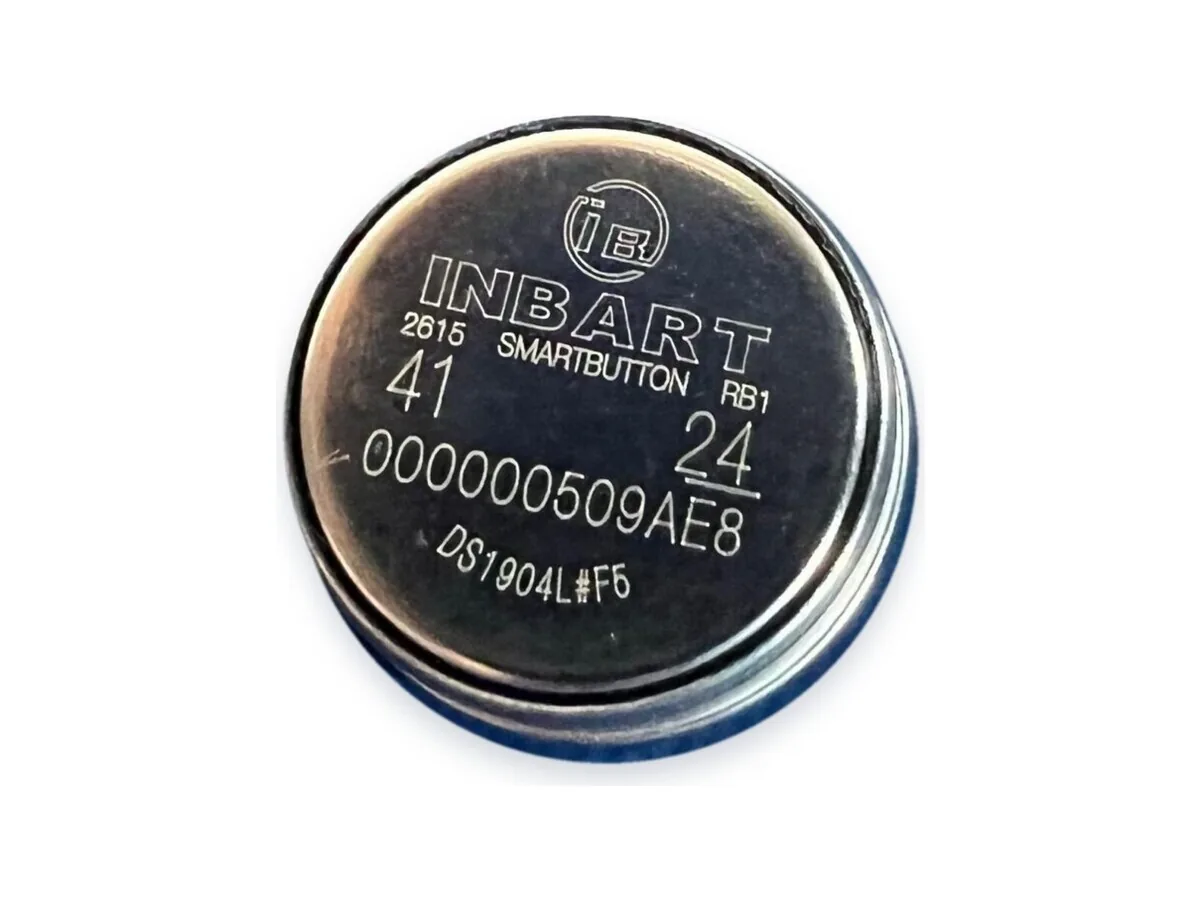
Adds a real-time clock to a microcontroller over a single 1-Wire contact. Time is kept as a 32-bit binary count of seconds — one-second resolution, over 136 years before rollover — so the same token can time-and-date-stamp events, act as an hour-meter, or drive a logbook (per the original manufacturer's datasheet; confirm for the supplied version). It uses the same binary time format as the DS1994 but is purely a clock, with no interval timer or counters.
Ordering information
| MOQ | Confirmed by model and order when quoting |
|---|---|
| Preparation time | Availability and lead time are confirmed by model and order when quoting |
| Packing | Confirm pack quantity, protection and labelling for the selected model. |
| Samples | Sample quantity, fees and shipping are confirmed for the selected model. |
| Payment | Agree payment terms and the payee in the quotation and invoice. |
| Shipping | Confirm the shipping method, cost and timing for your destination and order. |
| Customization | State ROM, colour, marking and packing needs; feasibility and cost require confirmation. |
A clock, not a memory
Everything else in this category stores data; the DS1904L stores time. It is a pure real-time clock — a 32-bit binary seconds counter driven by a 32.768 kHz crystal, specified accurate to better than ±2 minutes a month, with 136 years before it rolls over (per the original manufacturer's datasheet; confirm for the supplied version). Touch it to a microcontroller that has no RTC of its own and that device can gain a timebase over a single wire. If you want the clock *and* memory in one token, that is the DS1994; if you only need the timestamp source, this is the smaller, simpler answer.
Key features
- Original DS1904 reference: a 1-Wire real-time clock with binary time data and one-second resolution.
- Useful for equipment timestamps and elapsed-time records when the host implements the clock commands.
- Ask whether the full part suffix, production date and acceptance-test information (clock, battery) are available for the quoted lot; test a sample on your equipment.
Specifications
| Chip / compatibility | DS1904 · family code 24h · chip-form DS2415 |
|---|---|
| Memory | 32-bit binary seconds counter (1 s resolution, 136-year span) + 4 user flag bits |
| Protocol | 1-Wire, 16.3 kbit/s; RTC accuracy better than ±2 min/month at +25 °C — per the original manufacturer's datasheet; confirm for the supplied version |
| Package | F5 can |
| Operating temperature | −40 °C … +85 °C (1-Wire chip, per the original manufacturer's datasheet; confirm for the supplied version) |
Inside the stainless can
Typical construction of this can format: a stainless-steel shell, an insulating grommet separating lid from base, and the chip bonded inside. Lid = data contact, base = ground return. Wall thickness, grommet material and other construction details: confirm for the supplied version.
Which memory iButton do you need?
The whole memory range side by side, grouped by storage technology — capacities and family codes per the Analog Devices datasheets.
| Model | Family code | Capacity | Memory technology | Pick it for |
|---|---|---|---|---|
| DS1971 | 14h | 256 bit + 64-bit OTP | EEPROM — battery-free | Asset tag: a locked ID beside rewritable data |
| DS1972 | 2Dh | 1 Kbit (128 B) | EEPROM — battery-free | Per-page write-protect or EPROM-emulation modes |
| DS1973 | 23h | 4 Kbit (512 B) | EEPROM — battery-free | Battery-free rewritable memory (4 Kbit); production travellers |
| DS1982 | 09h | 1 Kbit (128 B) | EPROM — add-only; written data is not erasable (per datasheet) | Add-only records such as checkpoints and certificates |
| DS1985 | 0Bh | 16 Kbit (2 KB) | EPROM — add-only; written data is not erasable (per datasheet) | Append-only service history (16 Kbit) |
| DS1992 / DS1993 | 08h / 06h | 1 Kbit / 4 Kbit | NV RAM — battery-backed, high write endurance (per datasheet) | Data that changes constantly on the key |
| DS1996 | 0Ch | 64 Kbit (8 KB) | NV RAM — battery-backed, high write endurance (per datasheet) | Portable database — 64 Kbit NV RAM |
| DS1994 | 04h | 4 Kbit + RTC | NV RAM + clock, timer, counter, alarms | Time- or usage-limited access with the expiry held in the key |
| DS1904L | 24h | No user memory | Real-time clock only | Give a microcontroller a real-time timebase |
| DS1991 | 02h | 1152 bit = 3 × 384 bit | Secure NV RAM — three password zones | Legacy multi-tenant systems (not for new secure designs) |
| DS1961S | 33h | 1 Kbit + 64-bit secret | EEPROM + SHA-1 challenge–response | Authentication: proves it knows a secret (assess cloning risk for your own system) |
Typical applications
Frequently asked questions
Does the DS1904L store any user data?
No — it is a pure real-time clock: a 32-bit binary seconds counter (1-second resolution, 136 years before rollover) plus four user flag bits, read over a single 1-Wire contact. For time plus storage, step up to the DS1994.
How accurate is the clock?
Per the original manufacturer's datasheet, better than ±2 minutes per month at +25 °C, driven by a 32.768 kHz crystal, with an operating range of −40 to +85 °C in the F5 can; confirm for the supplied version.
What is it typically used for?
Giving an accurate timebase to equipment whose microcontroller has no RTC: time-and-date-stamping events, hour-metering machine run time, or driving a logbook — all through the same 1-Wire contact the system already reads keys with.
Related products
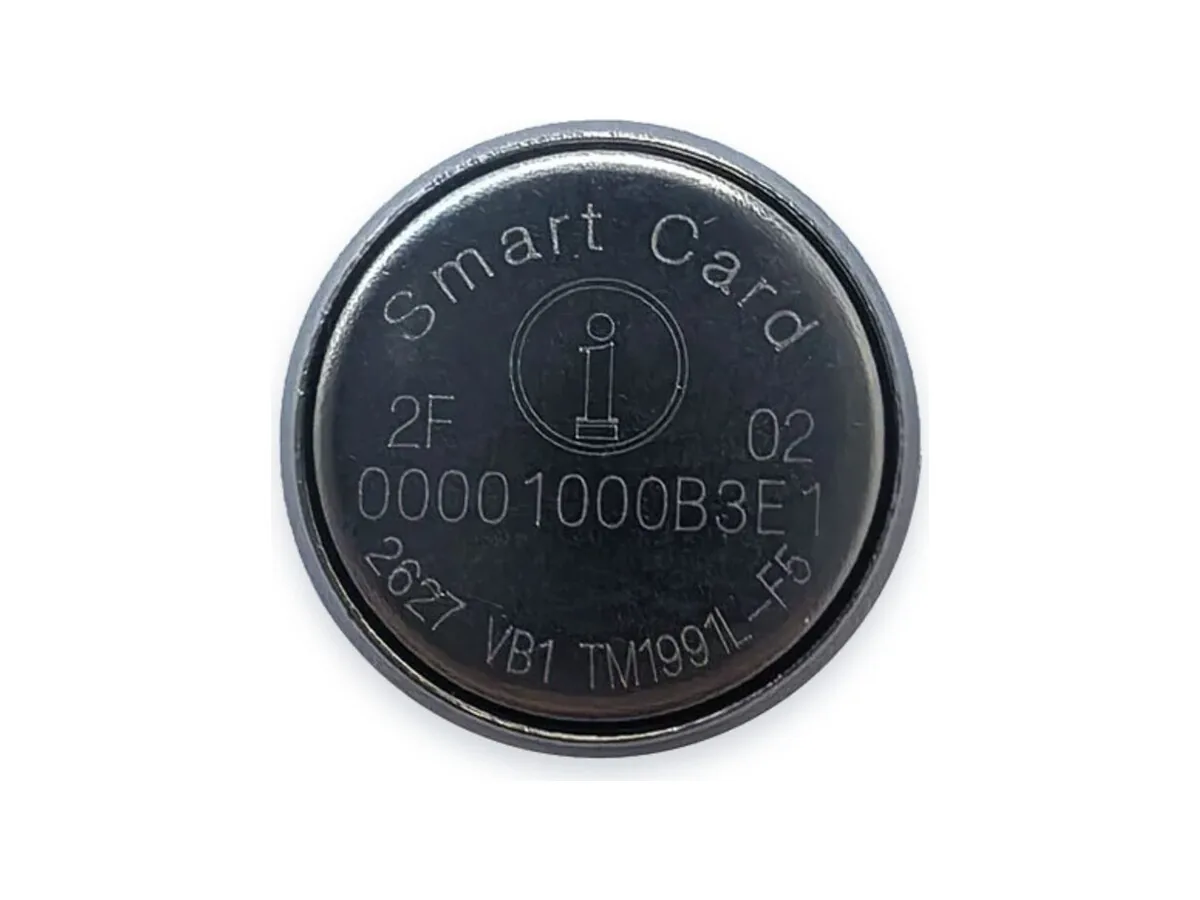
DS1991 MultiKey iButton
Three password-protected 384-bit subkeys in one button.
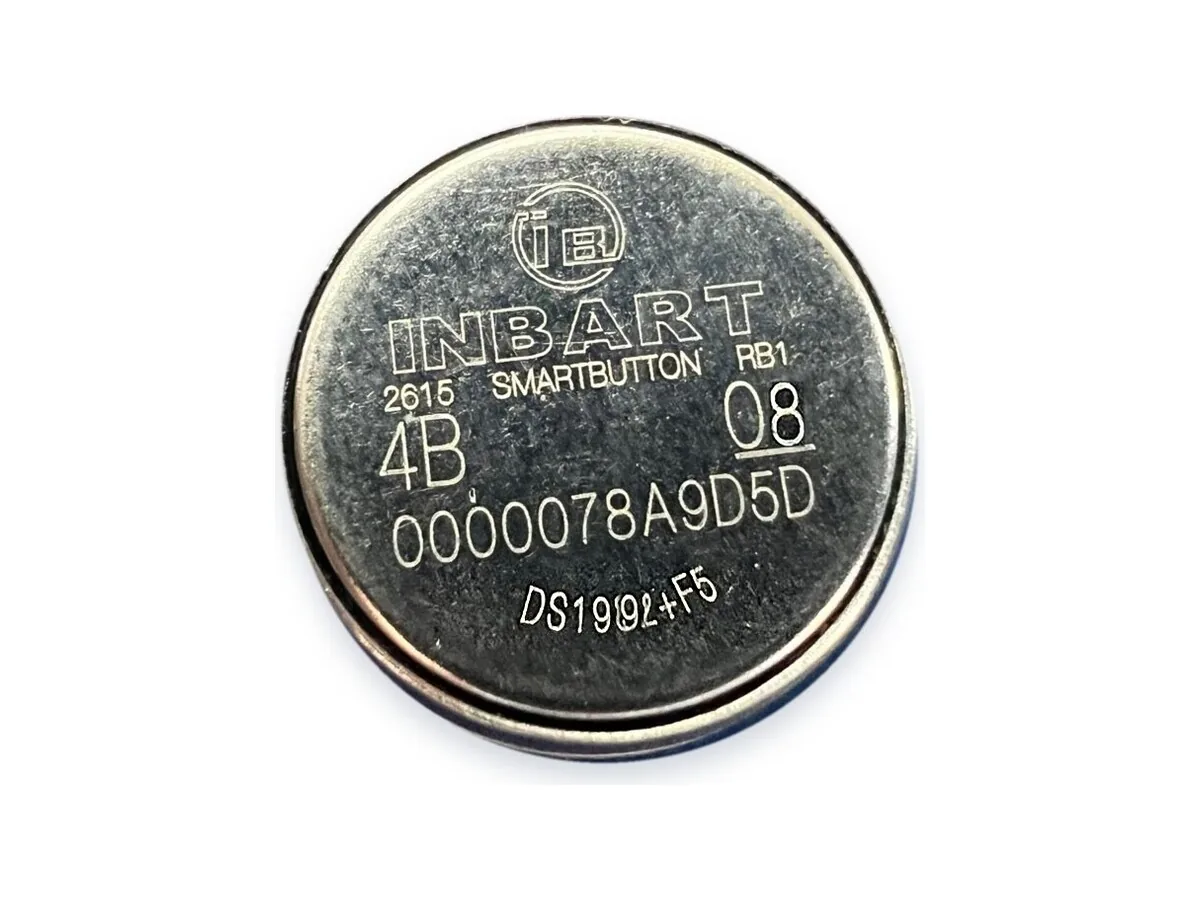
DS1992 / DS1993 Memory iButton
1 Kb and 4 Kb NV RAM tokens for carrying data on the key.
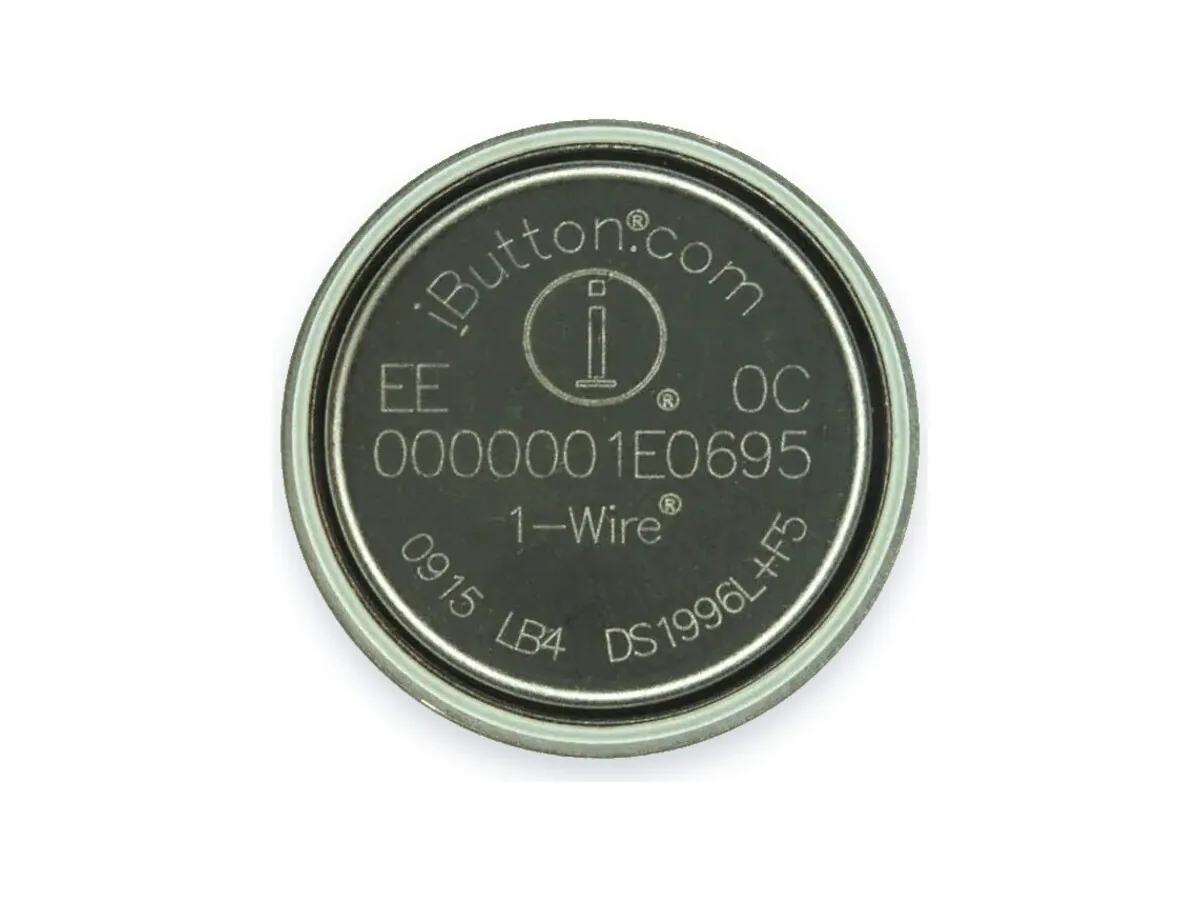
DS1996 64 Kb Memory iButton
The large-memory token — 64 Kb of rewritable NV RAM.
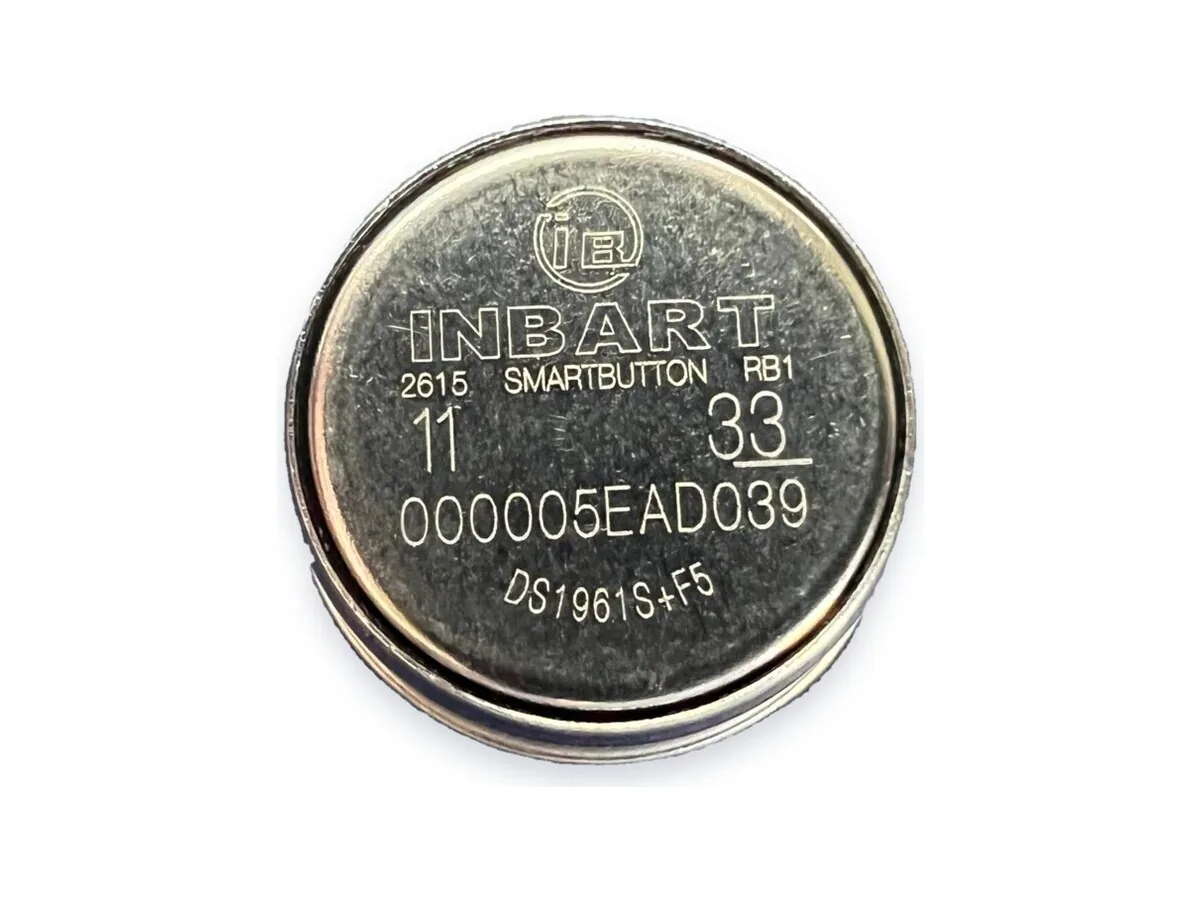
DS1961S SHA-1 Authentication iButton
1 Kb EEPROM with on-chip SHA-1 challenge–response.