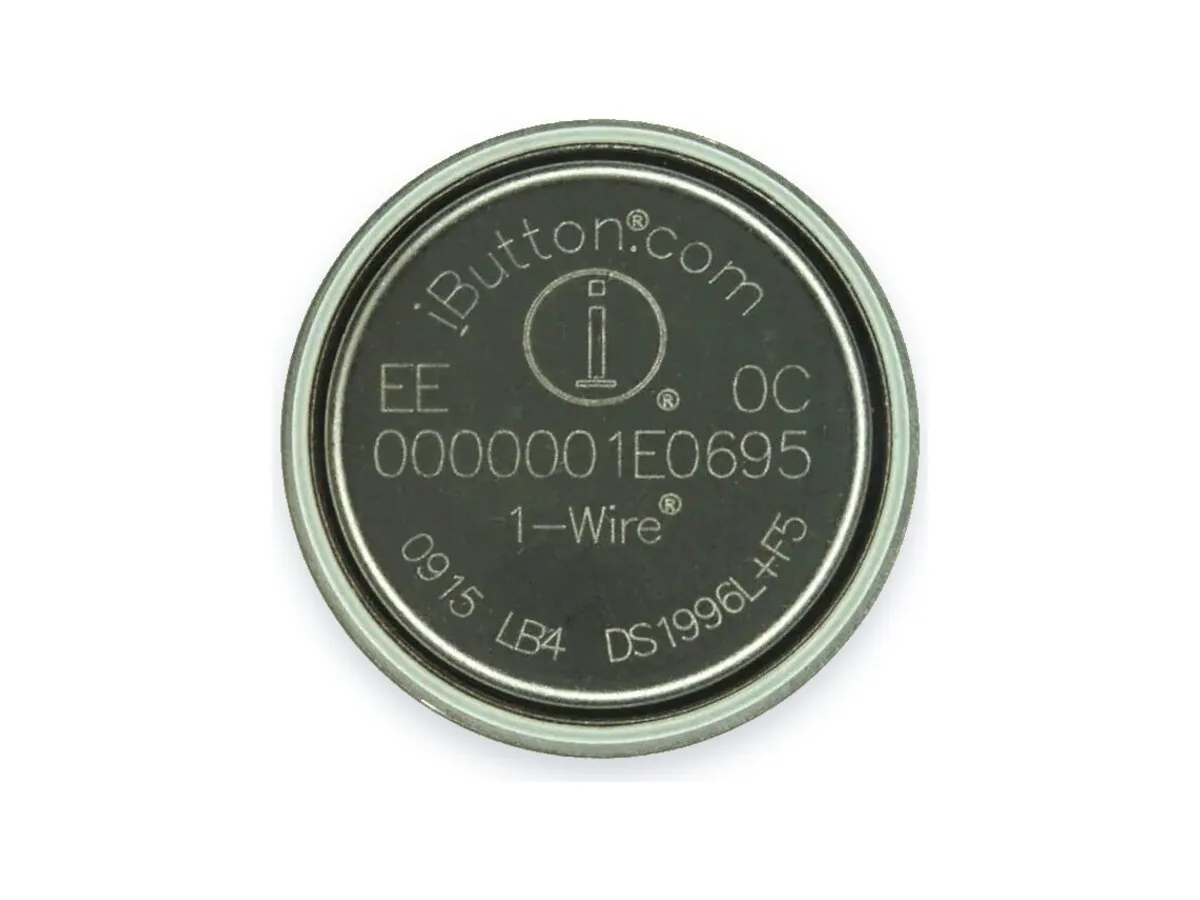
DS1996 64 Kb Memory iButton
The large-memory token — 64 Kb of rewritable NV RAM.
The largest NV RAM device in the family, commonly specified by access controllers that store event or personnel data on the key itself rather than in the panel.
The biggest memory in the family — 64× a DS1992
8 KB on a key ring. At sixty-four times the capacity of a DS1992 and sixteen times a DS1993, the DS1996 stops being a data carrier and becomes a portable database — a full personnel record, a machine's complete calibration set, a route with hundreds of checkpoints, or a firmware payload delivered by hand to equipment with no network. It is still NV RAM, so rewrites are unlimited, and it is the device access-control makers reach for when the credential itself, not the panel, has to hold the event history.
Key features
- Largest-capacity NV RAM iButton — 64 Kbit (256 pages of 256 bits) as a rugged, portable database.
- Overdrive mode boosts the 1-Wire link to 142 kbit/s for fast reads/writes of the large memory.
- Battery-backed SRAM: unlimited rewrites, no write-endurance limit; scratchpad-verified writes.
- Family code 0Ch; parasite-powered ROM stays readable even if the battery depletes; over 10 years retention.
Specifications
| Chip / compatibility | DS1996 · family code 0Ch |
|---|---|
| Memory | 64 Kbit (8 KB) battery-backed NV RAM = 256 pages × 256 bits + 256-bit scratchpad; unlimited rewrites |
| Operating temperature | −40 to +70 °C · over 10 years data retention |
| Package | F5 can |
| Protocol | 1-Wire® |
Inside the stainless can
A 0.25 mm solid stainless shell, a UV-stable polypropylene grommet isolating lid from base, and the die bonded inside. Lid = data contact, base = ground return.
Which memory iButton do you need?
The whole memory range side by side, grouped by storage technology — capacities and family codes per the Analog Devices datasheets.
| Model | Family code | Capacity | Memory technology | Pick it for |
|---|---|---|---|---|
| DS1971 | 14h | 256 bit + 64-bit OTP | EEPROM — battery-free | Asset tag: a locked ID beside rewritable data |
| DS1972 | 2Dh | 1 Kbit (128 B) | EEPROM — battery-free | Per-page write-protect or EPROM-emulation modes |
| DS1973 | 23h | 4 Kbit (512 B) | EEPROM — battery-free | Largest battery-free memory; production travellers |
| DS1982 | 09h | 1 Kbit (128 B) | EPROM — add-only, cannot be erased | Tamper-evident checkpoints and certificates |
| DS1985 | 0Bh | 16 Kbit (2 KB) | EPROM — add-only, cannot be erased | Full append-only service history |
| DS1992 / DS1993 | 08h / 06h | 1 Kbit / 4 Kbit | NV RAM — battery-backed, unlimited writes | Data that changes constantly on the key |
| DS1996 | 0Ch | 64 Kbit (8 KB) | NV RAM — battery-backed, unlimited writes | Portable database — the largest capacity here |
| DS1994 | 04h | 4 Kbit + RTC | NV RAM + clock, timer, counter, alarms | Time- or usage-limited access that expires by itself |
| DS1904L | 24h | No user memory | Real-time clock only | Give a microcontroller an accurate timebase |
| DS1991 | 02h | 1152 bit = 3 × 384 bit | Secure NV RAM — three password zones | Legacy multi-tenant systems (not for new secure designs) |
| DS1961S | 33h | 1 Kbit + 64-bit secret | EEPROM + SHA-1 challenge–response | The anti-cloning choice — proves it knows a secret |
Ordering information
| MOQ | 100 pcs |
|---|---|
| Lead time | 3–7 days for stock items, 10–15 days for OEM |
| Packing | Bulk ESD bags (100–200 pcs/bag, 2 bags/carton); blister or header cards for retail on request |
| Samples | Free samples for volume buyers — courier at cost |
| Payment | T/T bank transfer; other terms negotiable for repeat orders |
| Shipping | DHL / FedEx / UPS air express; sea or rail freight for pallet volumes |
| Customization | ROM ranges · housing colours · laser logo · private label |
Typical applications
Frequently asked questions
How much data can a DS1996 hold?
64 Kbit (65,536 bits) of rewritable NV RAM, organised as 256 pages of 256 bits — the largest-capacity NV RAM iButton, effectively a rugged portable database on a key.
Can the DS1996 be rewritten without wearing out?
Yes — it is battery-backed SRAM, so it has no EEPROM-style write-cycle limit and can be rewritten freely. Overdrive mode raises the 1-Wire link to 142 kbit/s for fast reads and writes of the large memory, and the ID stays readable even if the battery depletes.
Related products
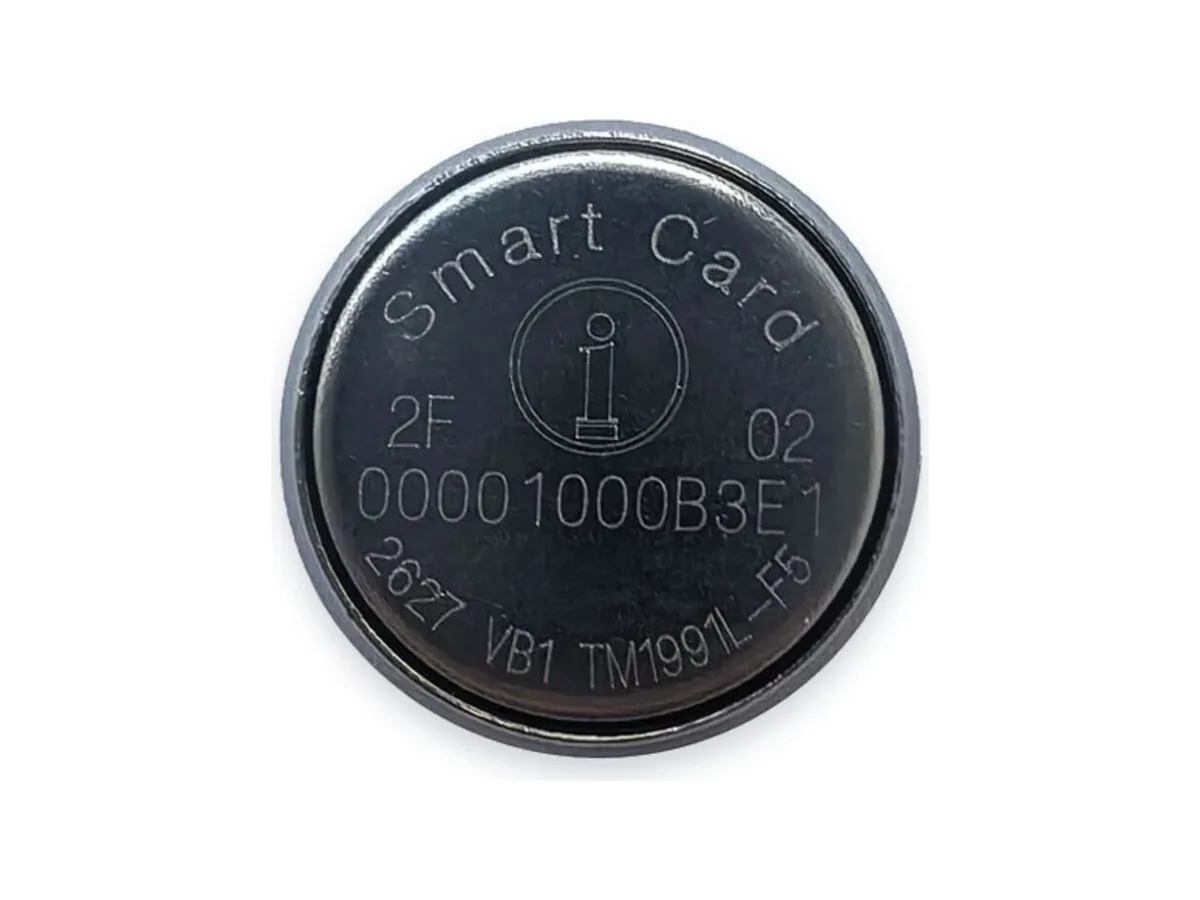
DS1991 MultiKey iButton
Three password-protected 384-bit subkeys in one button.
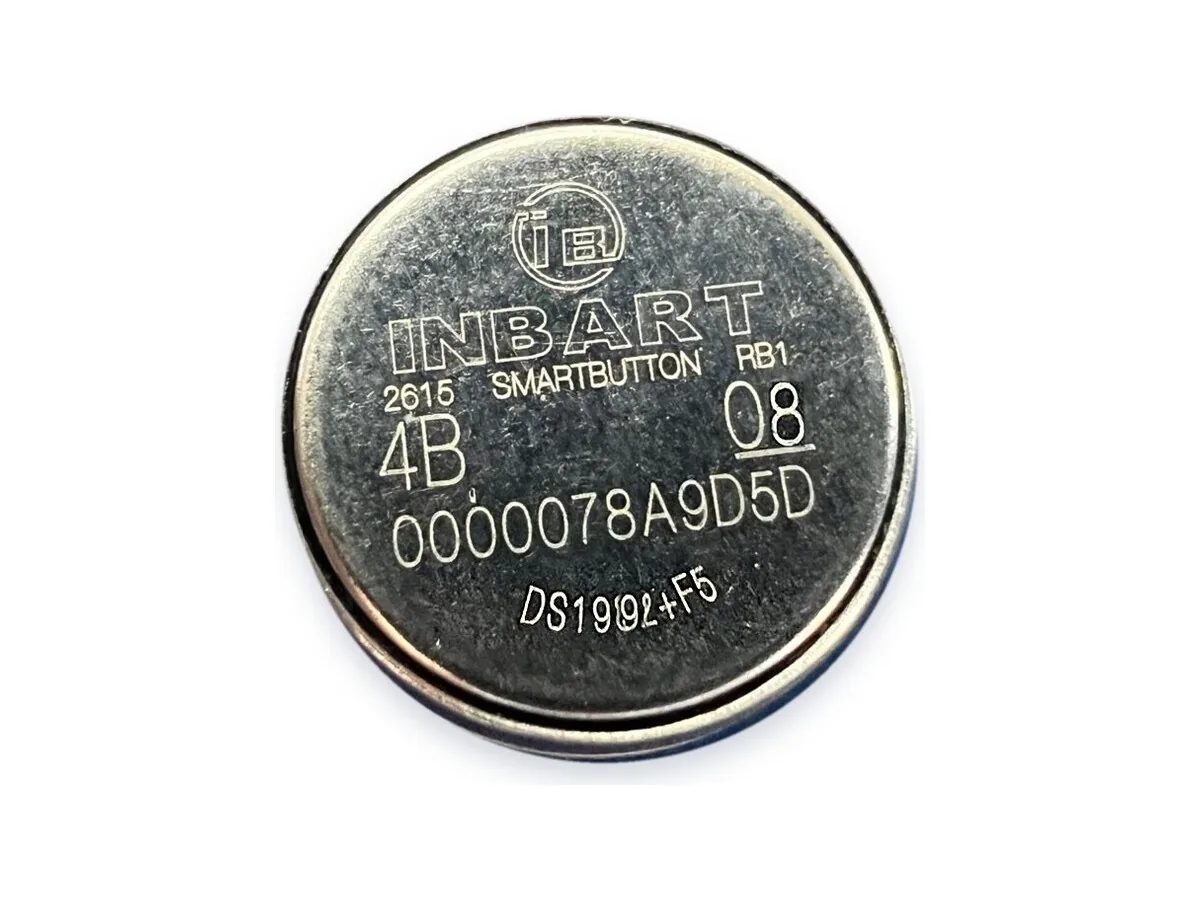
DS1992 / DS1993 Memory iButton
1 Kb and 4 Kb NV RAM tokens for carrying data on the key.
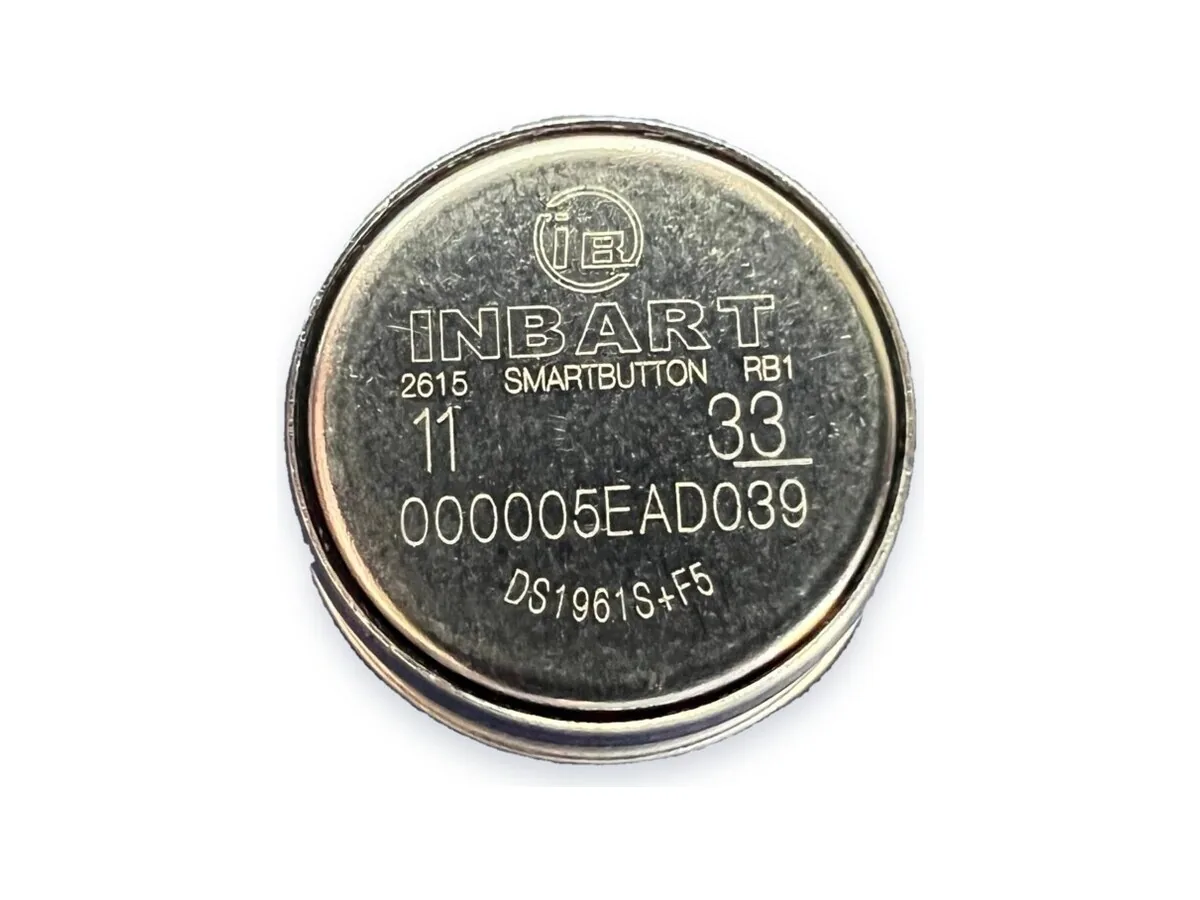
DS1961S SHA-1 Authentication iButton
1 Kb EEPROM with on-chip SHA-1 challenge–response.
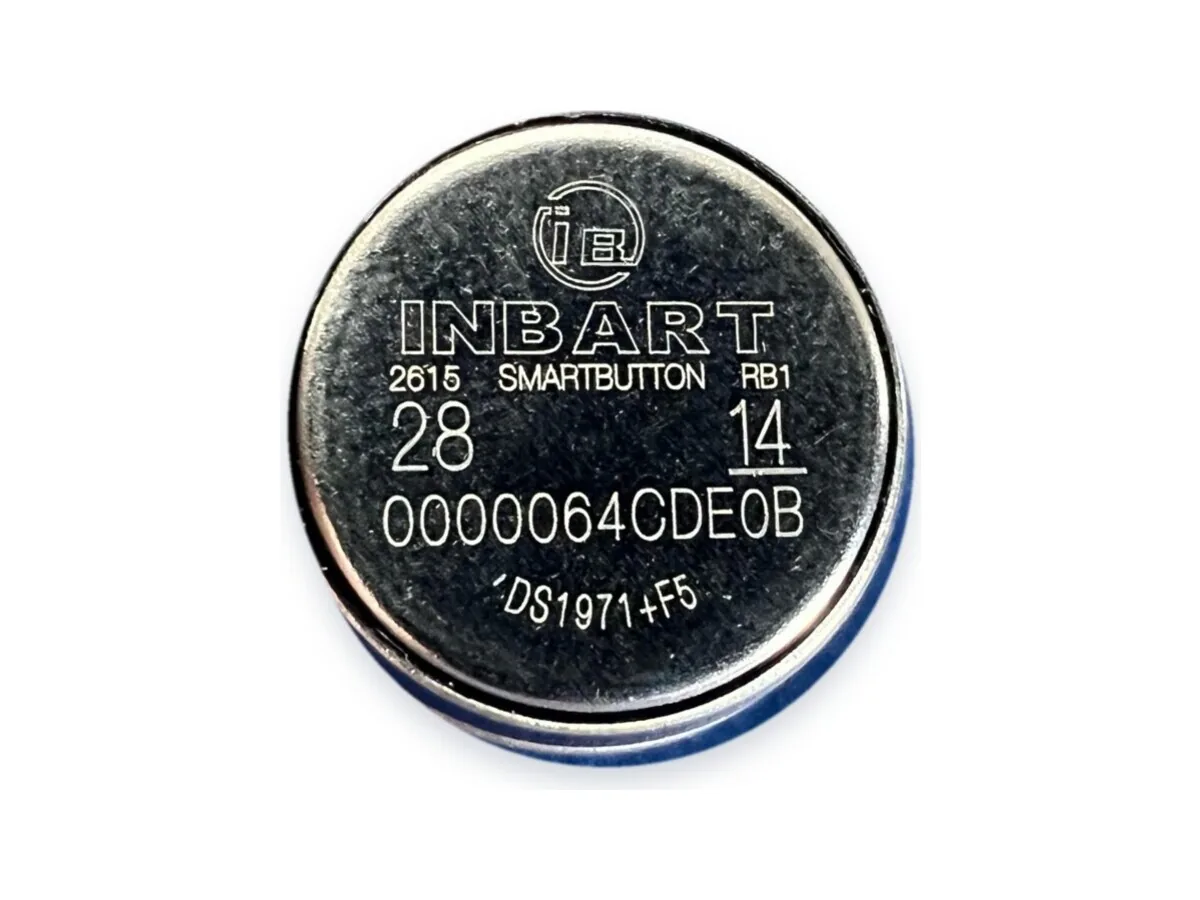
DS1971 EEPROM iButton
256-bit EEPROM — non-volatile without a battery.