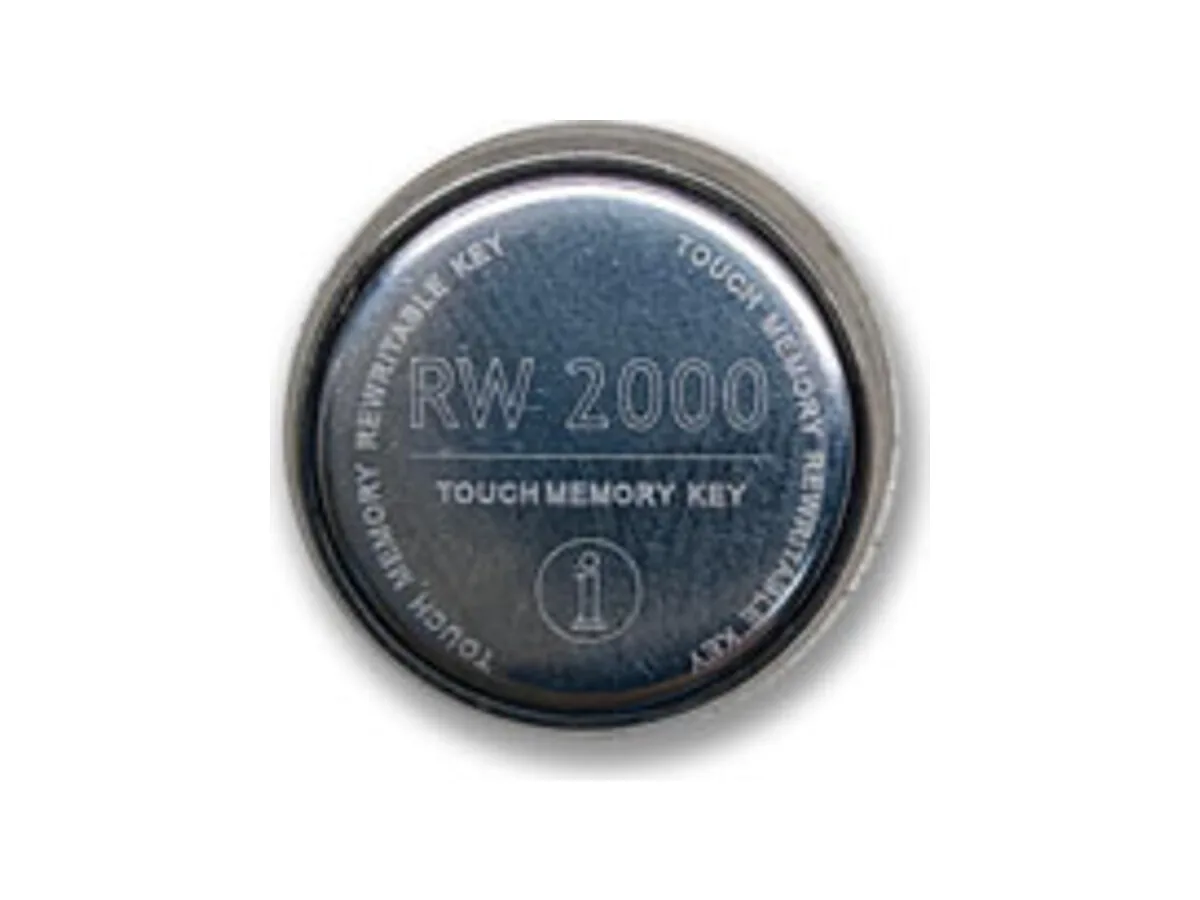
RW2000 One-Time Copy Blank (Cyfral / Metakom)
OTP blank that copies Cyfral and Metakom keys once — then locks like an original.
A one-time-programmable blank for the two big non-Dallas intercom formats. A standard duplicator writes the Cyfral or Metakom code once; the blank then locks permanently and cannot be re-flashed — the copy behaves like an original key, which is exactly what estates worried about key-of-key cloning ask for. For repeat-use Dallas blanks choose RW1990 instead.
The OTP answer for Cyfral and Metakom doors
Two things set it apart at once. First, format: a Dallas blank such as RW1990 physically cannot operate a Cyfral or Metakom panel — different silicon, different signalling — and those panels still hold a large share of older CIS entrances. Second, permanence: the RW2000 programs exactly once and then locks, so the copy behaves like an original and cannot be quietly re-flashed to another door. Note the practical detail that catches shops out — writing it needs a raised programming voltage of about 8 V, so an older copier that handles RW1990 fine may still refuse this blank.
Specifications
| Chip / compatibility | RW2000 · Cyfral / Metakom emulation, one-time programmable (OTP) |
|---|---|
| Memory | Writes once with any standard duplicator, then locks read-only |
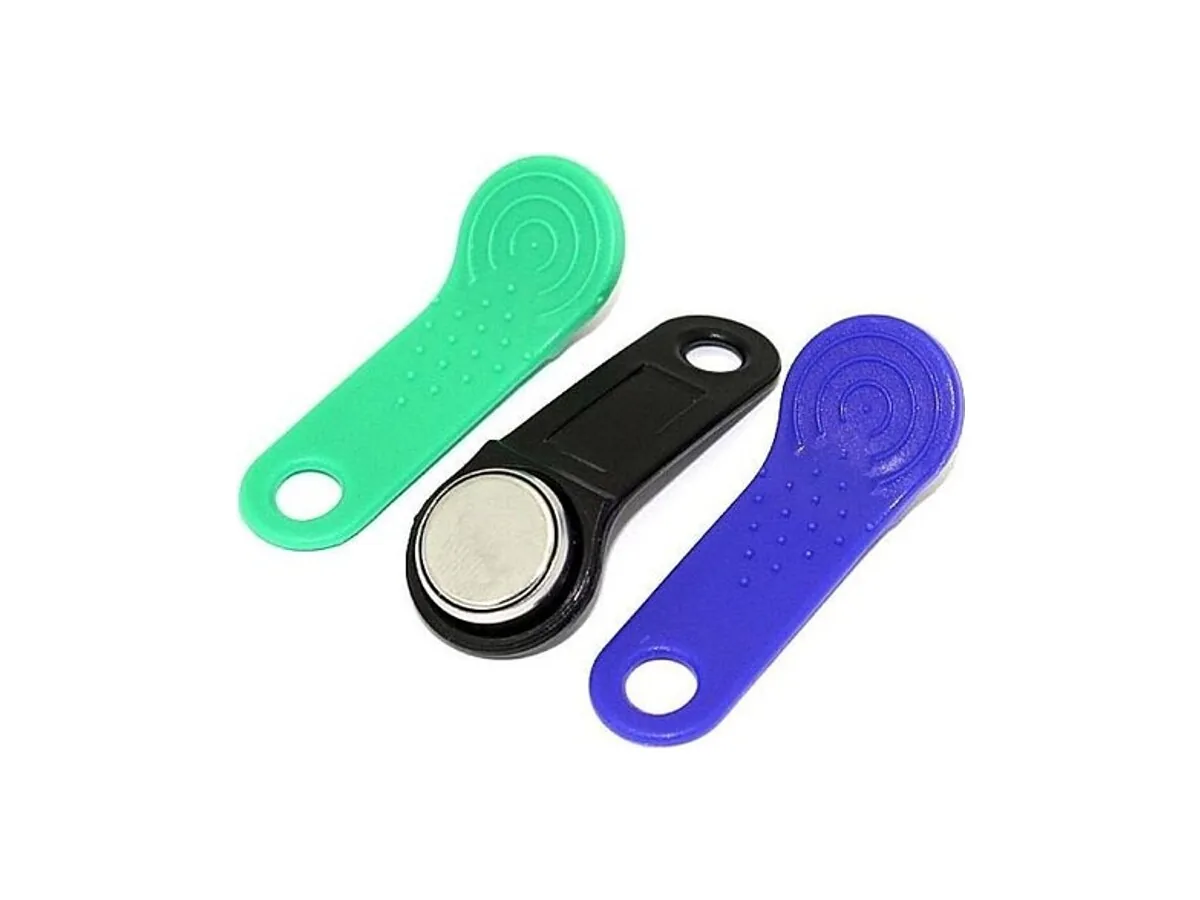
| Package | F5 stainless can, laser-marked "RW 2000" |
| Protocol | Cyfral / Metakom (not 1-Wire Dallas) |
| Options | Bare can or with fob handle, 12 handle colours; writing requires ~8 V — check your duplicator supports the RW2000 routine |
Inside the stainless can
A 0.25 mm solid stainless shell, a UV-stable polypropylene grommet isolating lid from base, and the die bonded inside. Lid = data contact, base = ground return.
Which blank does your duplicator write?
Blanks differ less in the finished key than in how the copier writes them. Protocol names follow the routines used in mainstream and open-source duplicator firmware — check the blank list in your machine's manual before ordering.
| Model | Format branch | Write protocol | Rewritable? | Pick it for |
|---|---|---|---|---|
| RW1990 | Dallas 1-Wire | RW1990.1 | Rewritable, ~10⁵ cycles | The safe default — every copier writes it |
| RW1990.2 | Dallas 1-Wire | RW1990.2 | Rewritable | When the copier lists ".2" specifically |
| TM-01A | Dallas 1-Wire | TM-01 | One-time only — locks after writing | Estates that ban re-writable duplicates |
| TM08v2 | Dallas + Cyfral + Metakom | RW1990.1 | Rewritable | One SKU for a mixed estate |
| RW2004 / TM2004 | Dallas 1-Wire (+ multi-format versions) | TM2004 | Rewritable + writable memory block | Controllers that read data, not just an ID |
| RW2000 | Cyfral / Metakom | RW2000 (~8 V) | One-time only — locks after writing | Cyfral & Metakom doors, tamper-proof copy |
Ordering information
| MOQ | 100 pcs |
|---|---|
| Lead time | 3–7 days for stock items, 10–15 days for OEM |
| Packing | Bulk ESD bags (100–200 pcs/bag, 2 bags/carton); blister or header cards for retail on request |
| Samples | Free samples for volume buyers — courier at cost |
| Payment | T/T bank transfer; other terms negotiable for repeat orders |
| Shipping | DHL / FedEx / UPS air express; sea or rail freight for pallet volumes |
| Customization | ROM ranges · housing colours · laser logo · private label |
Typical applications
Frequently asked questions
What is the difference between RW2000 and RW1990?
Two different jobs. RW1990 is a rewritable Dallas (1-Wire) blank — its ID can be written and re-written around 100,000 times. RW2000 targets the Cyfral and Metakom intercom formats and is one-time programmable: it accepts a single write, then locks permanently and behaves like an original key.
Can an RW2000 copy be copied again?
The RW2000 itself can never be re-written — after the single programming pass it is locked for good. The code it carries can still be read and written onto another blank, as with any original key; what OTP prevents is your issued copy being silently re-flashed to a different door.
Related products
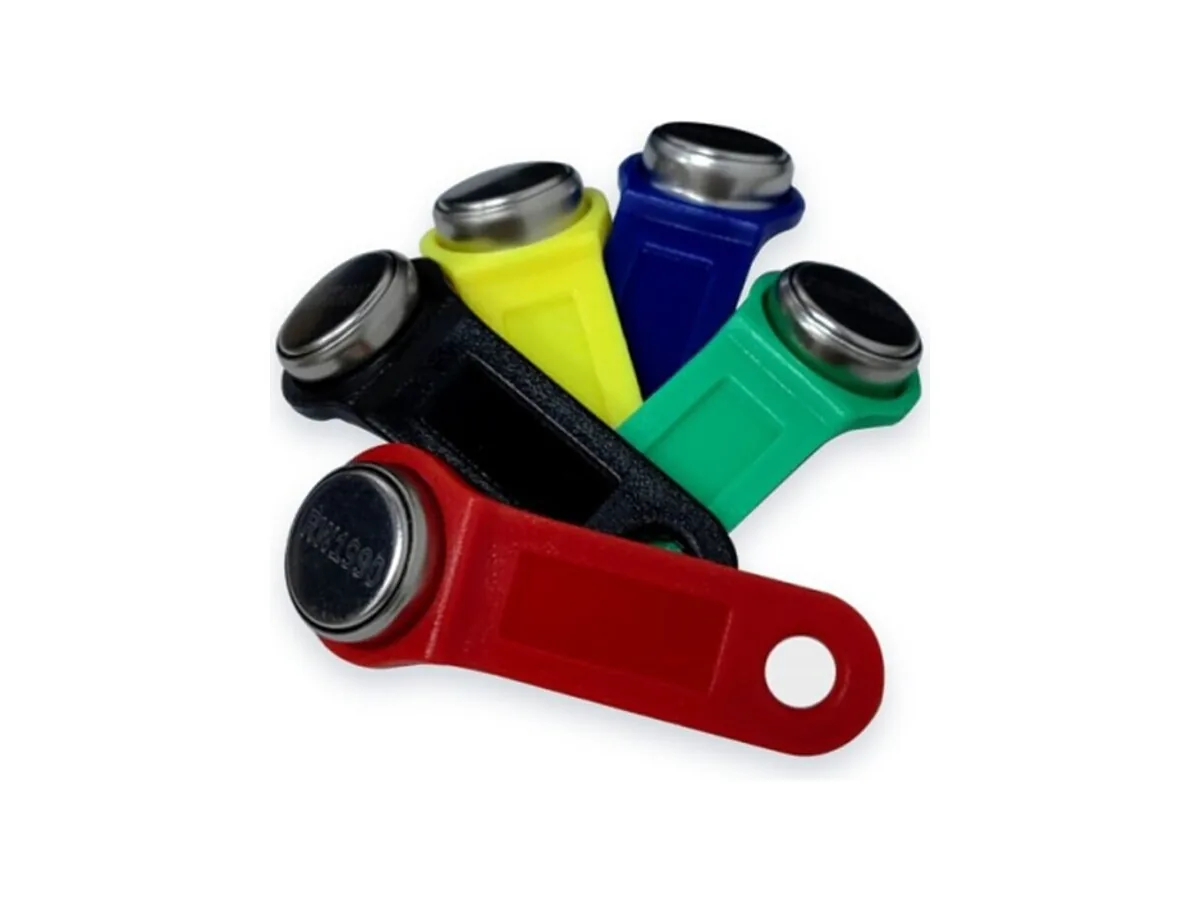
RW1990 Rewritable Blank
The classic rewritable TM blank for duplicating services.
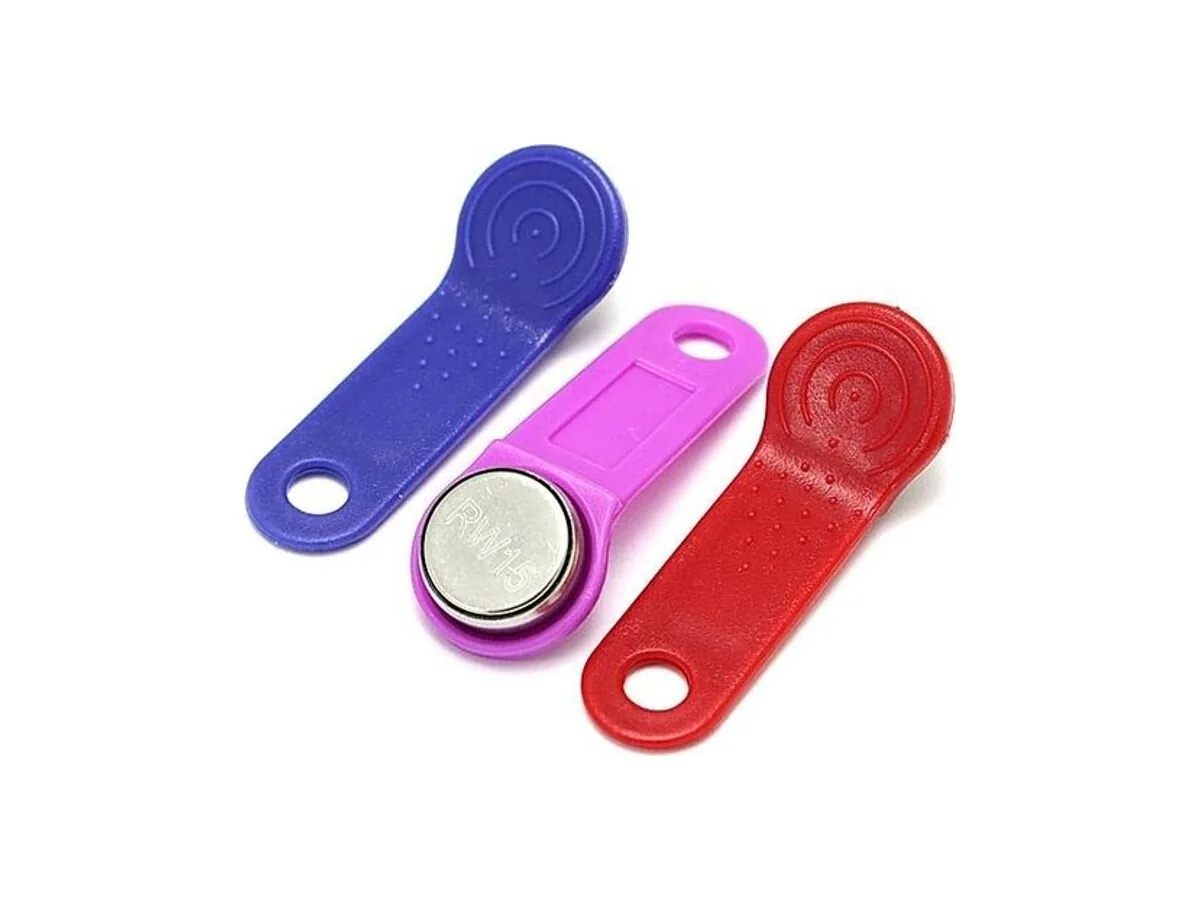
RW1990.2 Rewritable Blank
Revised RW1990 with wider duplicator compatibility.
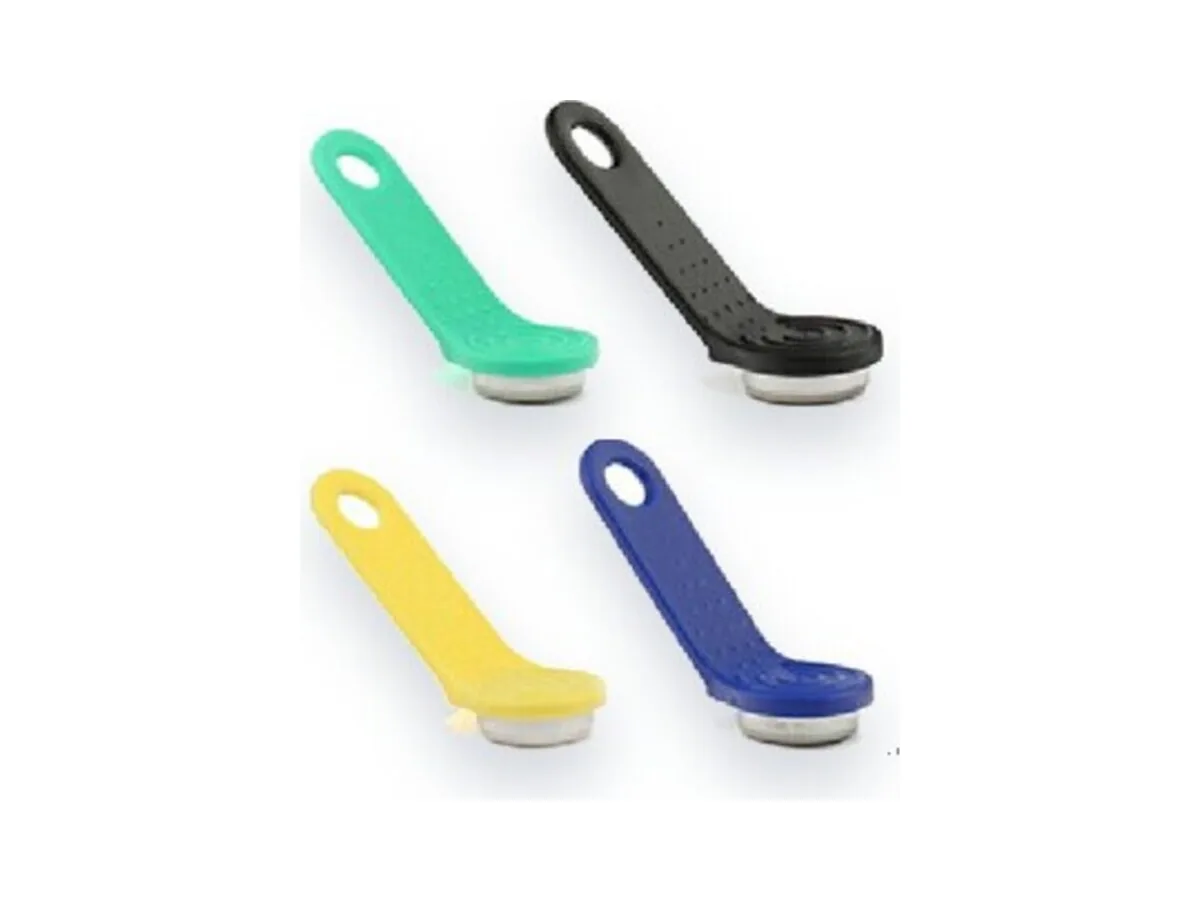
TM-01A One-Time Copy Blank (Dallas OTP)
Copies a TM1990A / DS1990A once — then locks permanently, like an original.
TM08v2 Universal Blank
Latest-generation universal blank with the widest reader coverage.